
Esse artigo pode ser lido em:


I have been testing and studying Semantic Web since 2015 when I first read the fundamental Google Semantic Search book. If you want you can still find the fiche I did on Medium.
You can read my texts on Medium, on Linkedin or here on Blog.
But what I want to show you is the most recent test I did, this time using two tools that I like very much, I have a lot of knowledge.
I usually recommend it to everyone who is creating a content project and they are WordPress and a plugin called Wordlift.
About Wordlift I have already written when I said that “The right tools for semantic SEO are strategies and tactics.” but to summarize for you, this plugin analyzes your content and identifies entities (entities) and organizes them into the four basic categories: Who, What, When and Where. Then it automates the markup of the article you wrote by adding contextual information, with internal links to a semantic vocabulary, which is updated with each new piece of content.
Creating new entities that will enrich your site‘s vocabulary and strengthen its relevance in your market is very simple to do.
And it was by using this strategy: WordPress content with semantic markup via Wordlift that I got to the result I am now showing you!
But first…
I want to share here a presentation I gave on September 11, 2021 on the YouTube channel of the IA Biblio BR group, with the theme “Semantics in Practice.” My presentation showed exactly the practical use of semantics in SEO using WordLift.
Case Study: Bezerra de Menezes.
I attend a spiritist house here in my city, Porto Alegre, in Rio Grande do Sul. I volunteer in the communications field and have started helping with the website, which is done in WordPress. Since I have so much experience, I decided to help in this area.
It was when I met the Wordlift people that the idea came to me: can I not optimize the house site using the plugin?
I installed the plugin and started creating the entities that would make up the semantic domain of the site. I did a little planning and decided to fence the name “Bezerra de Menezes” for this semantic optimization.
I mapped all the contents already created that could have entities related to Bezerra de Menezes and the Bezerra de Menezes Spiritist House.
Finding entities, optimizing vocabulary
Most of the work really is optimizing the vocabularies created by the plugin, Wordlift.
The content created for the site is not made by me, there are people who write on it. I just take the written content and, using the plugin, identify people, places, events, books that are of interest to people looking for a spiritist house and the plugin does the rest of the work.
Through Machine Learning and NLP the system does the whole process making my life easier in optimizing.
After that I go into all the entries that make up the vocabulary of the site and optimize them one by one.
I have noticed that the richer the entry gets, the better ranking it achieves. And the example I am going to give you is exactly that of Bezerra de Menezes:
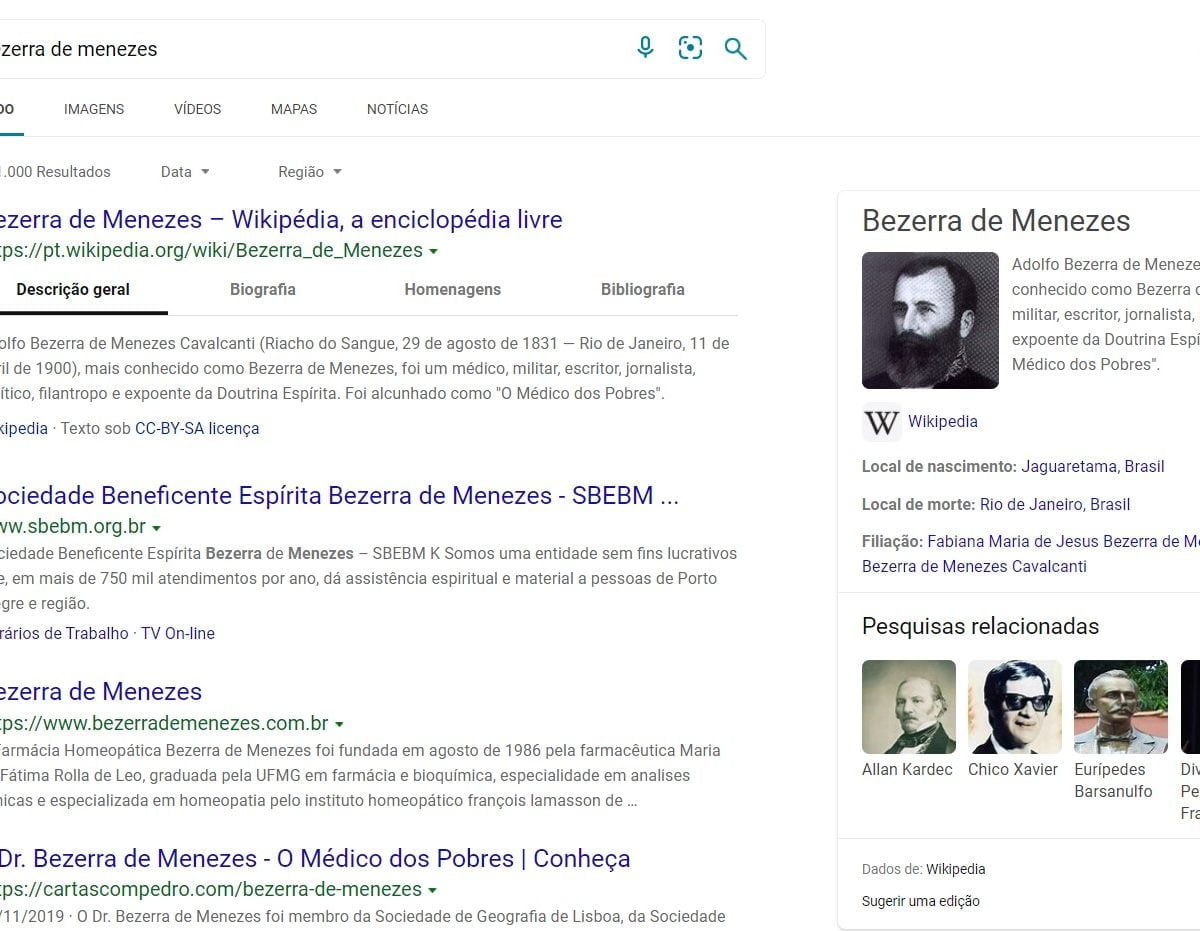
This result of a search done in Microsoft’s Edge browser using Bing shows results for the term “Bezerra de Menezes”.
Here the first result is from Wikipedia, for the page about the physician and spiritist, Dr. Bezerra de Menezes.
And the Side Snippet too, using content from Wikipedia. The second place (pointing to the website), the fourth (with the map to the site), the fifth (with the schedules, and the sixth (with Facebook) are all from the semantically optimized site.
Let’s now do a search using Google.
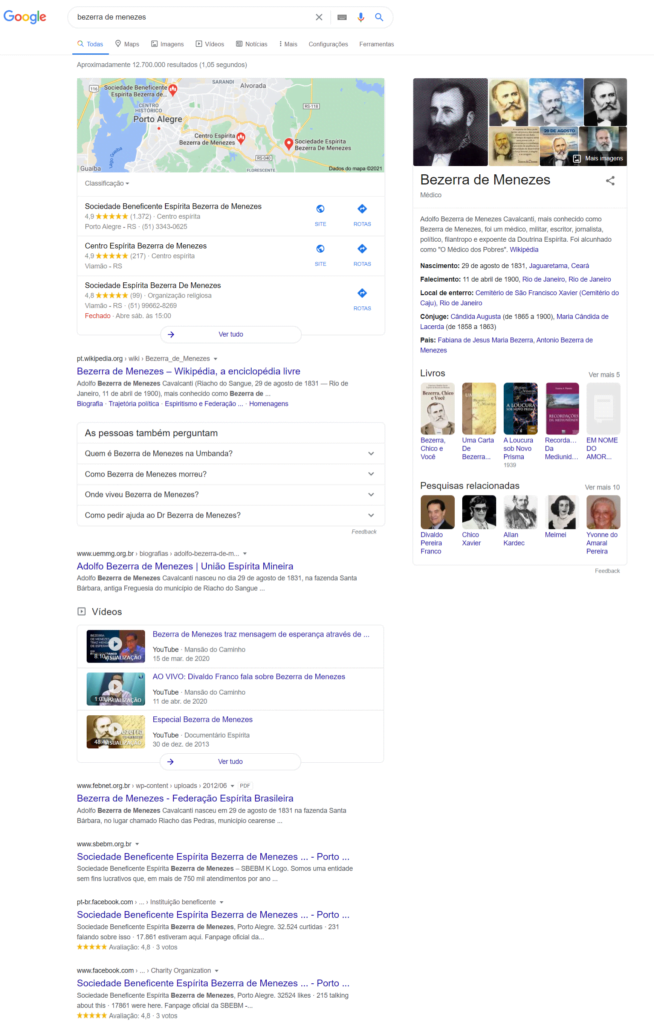
This result of a search done in Microsoft’s Edge browser, using Google Brazil, shows results for the term “Bezerra de Menezes”.
Notice that the first result, as expected is also from Wikipedia for the page talking about Dr. Bezerra. The second, third and fourth results are from the Sociedade Beneficente Espírita Bezerra de Menezes, pointing to the site that I optimized.
The Knowledge Graph of Google on the side also shows results from the spiritualist center. Google is more advanced in the use of semantically marked data and therefore displays more data. I performed this search to isolate the influence of my browsing and location on the results.
This result indicates the possibilities of using semantics in all website projects, especially those using WordPress, because of the ease of use of these plugins, which extend the reach of SEO .
The result I showed you was achieved in a short time in a word that does not have much competition and the amount of sites optimized for it are few.
But I know that the point is proven: semantic markup of your content is a competitive differentiator of your site, for sure.
June 2019 Update
This is another use case of structured markup of entities. We achieved good results for position zero in search (as seen below) as a source of content an entry (the divine laws) from the Vocabulary created.
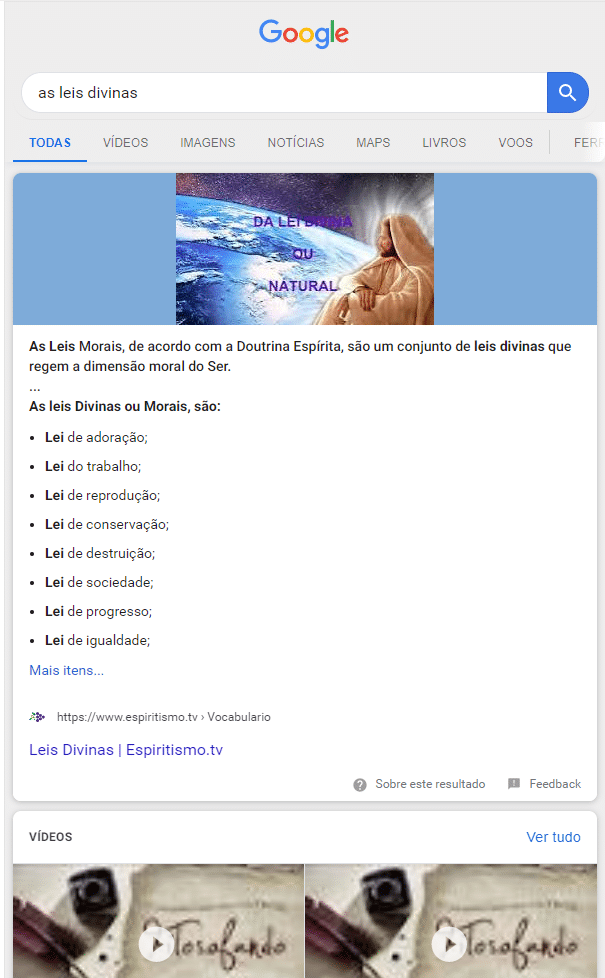
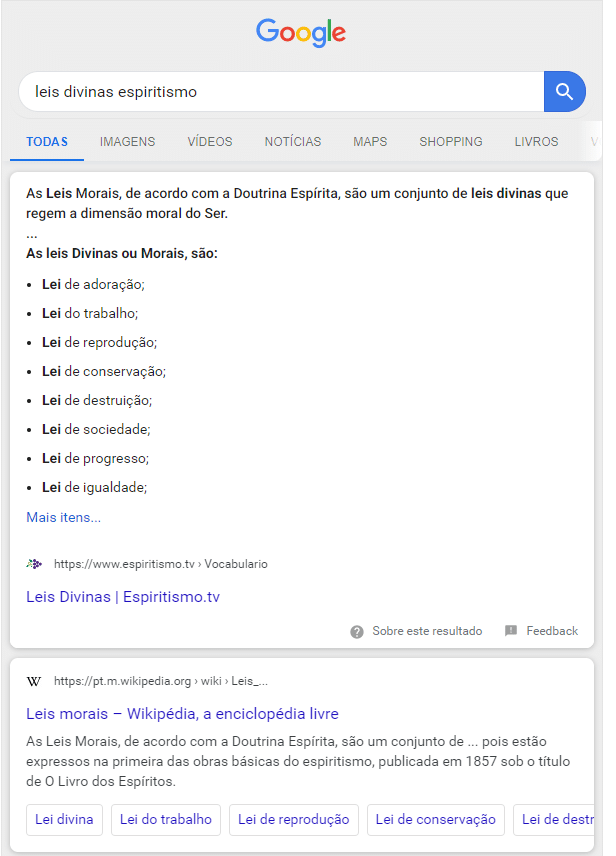
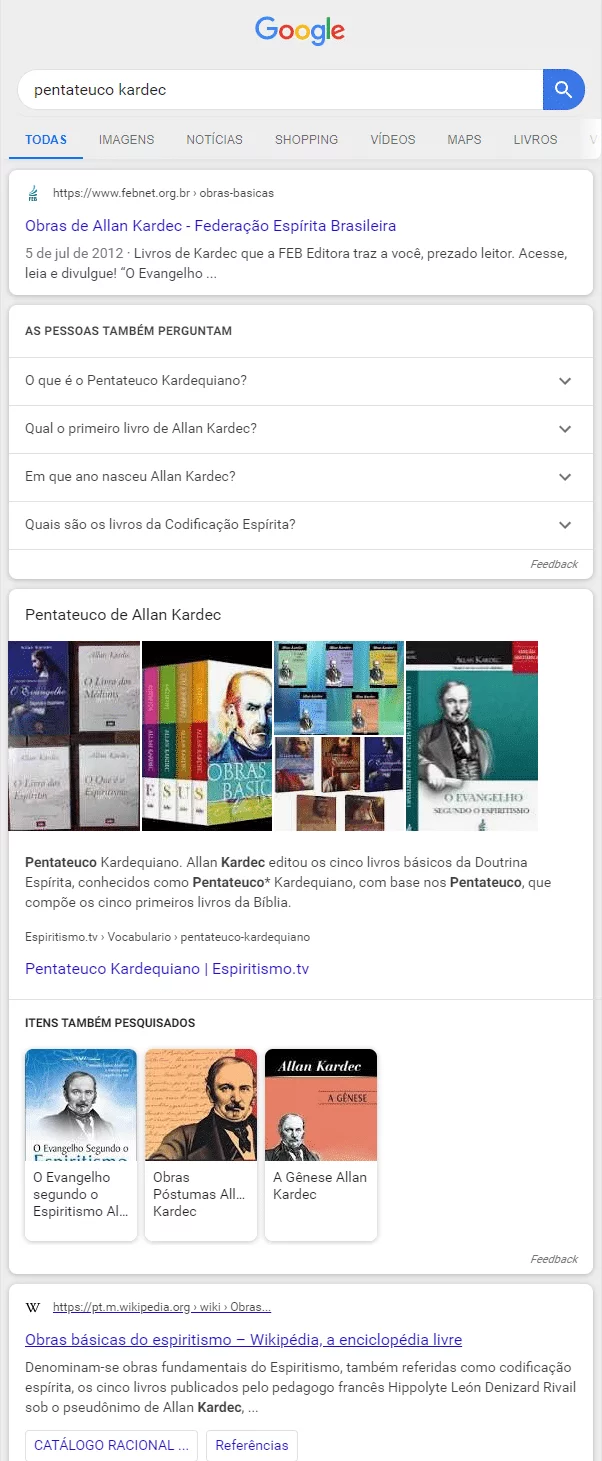
The goal is to have mobile performance.
Semantic Optimization: Results
In this second part of the Semantic SEO track I show some results that I have already achieved using semantic optimization in 3 different types of projects.
The Power of Semantic SEO
As you can see, with the correct use of knowledge, planning and strategy, it is possible to achieve a very interesting result. The investment in the WordLift subscription pays for itself with the addition of new visitors impacted by the results they found in search.
Sure, you can do some of the work that WordLift does with free plugins, but vocabulary building is manual and several features are missing.
But what is fundamental to this test of mine is the validation in practice of semanticSEO.
This work is still in the beginning, and new and better results should still emerge as I continue to optimize.
Frequently Asked Questions