


On October 25, 2019, Google made us a promise:
We are going to understand searches better than ever before.
Through the creation of a new search algorithm, BERT, Google promises to revolutionize searches once again.
According to the release posted on its English blog, the search engine explains that they analyze billions of searches every day, and 15% of these queries are ones we have never seen before. That is why we have created ways to return results for queries that we cannot predict.
Official launch of BERT
Today, December 9, 2019, Google announced in a tweet that it has rolled out the update to its algorithm for 70 different languages.
Tweet
BERT, our new way for Google Search to better understand language, is now rolling out to over 70 languages worldwide. It initially launched in Oct. for US English. You can read more about BERT below & a full list of languages is in this thread…. https://t.co/NuKVdg6HYM
— Google SearchLiaison (@searchliaison) December 9, 2019
People like you and me use searches every day. But we are not always sure of what we are looking for, or how to look for it.
The essence of search is language understanding.
Most of the time we are certain about what we want, but we are not absolutely certain of the terms that will lead us to the result we need. This happens because search engines need questions asked in their own way to deliver what we want.
This is what BERT aims to change!
As search tools evolved, especially Google’s, it became even more evident how some things still do not work well.
People still feel forced to perform searches from the perspective of the algorithm, trying to understand how the search engine will comprehend what they want to find, instead of asking questions the way a human being asks another.
The problem BERT wants to solve
To solve this problem, the company is making a significant improvement in the way they understand queries, representing the biggest leap forward in the last five years and one of the largest leaps forward in the history of Search.
The latest advances from Google’s search team in the science of language understanding, made possible by machine learning, indicate to us that future results will be incredible.
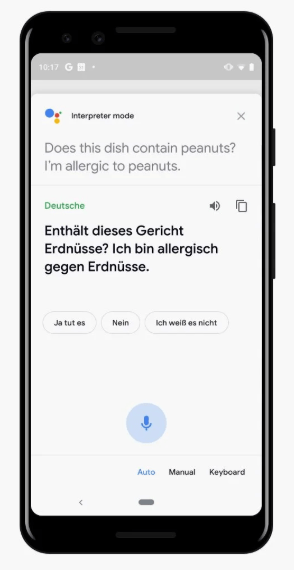
Want an example?
Google Translate with the help of Google Assistant can now translate speech in real time, straight from your phone. Called Interpreter Mode, this feature arrives to facilitate conversation between people speaking different languages.
Enter BERT
One of the biggest challenges in natural language processing (NLP) is the lack of training data to process our language in a way that solves the The pre-trained model can be adjusted during the NLP learning process using a small sample of data.
This training responds to questions and sentiment analyses, delivering substantial accuracy improvements compared to training on these data sets from scratch.
This technology allows anyone to train their own state-of-the-art question-answering system, unlocking new business possibilities for many companies of all sizes.
In short, critical terms will be taken much more into account starting with this implementation in the algorithm.Improving search in more languages
For featured snippets, Google is using a BERT model to improve featured snippets in the two dozen countries where this feature is available.
Analyzing these results, it is already possible to observe significant improvements in languages such as Korean, Hindi, and our Portuguese.
How do users understand search results?
Complex SERPs alter the behavior of users regarding searches, and a pattern emerges: the pinball pattern. To understand the pinball pattern, read this study by the Nielsen Norman Group by Kate Moran and Cami Goray.
Complex and dynamic content on results pages – SERPs – receives a lot of attention from search engines. When these features are present, such as featured snippets on the results page, Google researchers found that they received attention from users in 74% of cases.
As pages of search results now do not show equal patterns, from query to query, users are generally forced to evaluate the page before diving deeper and clicking on something.
This means that a SERP layout can determine which links get visibility and which ones are clicked.
The inconsistency of SERPs
The inconsistency in the SERP layout means that users work harder to process information today than they used to do previously.
We can say that search engines are encouraging us to explore the pages resulting from our searches more thoroughly, going beyond the first result. However, people are quite quick in choosing a search result – we found that users spent an average of 5.7 seconds considering the results before making their first selection (with a 95% confidence interval of 4.9 to 6.5 seconds).
You do not always need to be first
What does this new viewing pattern mean for digital product teams and content creators?
In 2006, the first result on any page of results received 51% of clicks. In our project, by contrast, we found that the first position on a SERP (defined as the first item listed in the search box) received only 28% of clicks – almost half, which is a drastic change in user behavior in a short span of just about a decade. 59% of clicks were concentrated in the top three positions, but lower positions received slightly more clicks than in 2006.
When pages of search results contain complex and visually appealing elements, users are more likely to be drawn to these elements and distribute their attention across the SERP.
If you manage to reach the top 5 positions on a SERP, you will have a good chance (40 to 80%) of obtaining valuable insight into your user.
It is still important to appear on the first page of results, as people are unlikely to click on the second page.
Consider adding some of these non-traditional SERP features to your search on the site, if it makes sense for your content. But remember that when result pages are very inconsistent from query to query, users need to re-evaluate the page each time, which increases the cost of interaction.
Source: https://www.nngroup.com/articles/pinball-pattern-search-behavior/
The new Google search algorithm: BERT
.org/resource/Technologia”,”http://pt.dbpedia.org/resource/Tecnologia”,”http://rdf.freebase.com/ns/m.07c1v”,”http://ro.dbpedia.org/resource/Tehnologie”,”http://ru.dbpedia.org/resource/Технология”,”http://sk.dbpedia.org/resource/Technológia”,”http://sl.dbpedia.org/resource/Tehnologija”,”http://sr.dbpedia.org/resource/Технологија”,”http://sv.dbpedia.org/resource/Teknologi”,”http://tr.dbpedia.org/resource/Teknoloji”,”http://uk.dbpedia.org/resource/Технологія”],”types”:[“creative-work”]},{“annotations”:{“urn:enhancement-27”:{“start”:5138,”end”:5285,”text”:”search”}},”description”:””,”id”:”http://data.wordlift.io/wl01797/entity/otimizacao”,”label”:”Optimization”,”mainType”:”creative-work”,”occurrences”:[“urn:enhancement-27″],”sameAs”:[“http://rdf.freebase.com/ns/m.0dpl_”,”http://dbpedia.org/resource/Mathematical_optimization”,”http://data.wordlift.io/wl0221/entity/otimizacao”,”http://data.wordlift.io/wl0221/entity/algoritmo_de_busca”,”http://de.dbpedia.org/resource/Optimierung_(Mathematik)”,”http://no.dbpedia.org/resource/Optimering”,”http://ru.dbpedia.org/resource/Оптимизация_(математика)”,”http://fi.dbpedia.org/resource/Matemaattinen_optimointi”,”http://pt.dbpedia.org/resource/Otimização”,”http://bg.dbpedia.org/resource/Математическа_оптимизация”,”http://lt.dbpedia.org/resource/Optimizavimas_(matematika)”,”http://hr.dbpedia.org/resource/Optimizacija_(matematika)”,”http://fr.dbpedia.org/resource/Optimisation_(mathématiques)”,”http://hu.dbpedia.org/resource/Matematikai_optimalizálás”,”http://uk.dbpedia.org/resource/Оптимізація_(математика)”,”http://sk.dbpedia.org/resource/Optimalizácia_(matematika)”,”http://sl.dbpedia.org/resource/Optimizacija_(matematika)”,”http://id.dbpedia.org/resource/Optimisasi”,”http://ca.dbpedia.org/resource/Optimització_matemàtica”,”http://sr.dbpedia.org/resource/Оптимизација_(математика)”,”http://sv.dbpedia.org/resource/Optimeringslära”,”http://en.dbpedia.org/resource/Mathematical_optimization”,”http://it.dbpedia.org/resource/Ottimizzazione_(matematica)”,”http://es.dbpedia.org/resource/Optimización_(matemática)”,”http://cs.dbpedia.org/resource/Optimalizace_(matematika)”,”http://pl.dbpedia.org/resource/Optymalizacja_(matematyka)”,”http://da.dbpedia.org/resource/Optimering_(matematik)”,”http://ro.dbpedia.org/resource/Optimizare”,”http://nl.dbpedia.org/resource/Wiskundige_optimalisatie”,”http://tr.dbpedia.org/resource/Optimizasyon”],”types”:[]},{“annotations”:{“urn:enhancement-dee327ad-3c37-45e3-8fc3-10aa7c9aec44”:{“start”:13552,”end”:13732,”text”:”pattern”},”urn:enhancement-3e366f81-32a3-4119-b85b-935e4be590c1″:{“start”:13766,”end”:13946,”text”:”pattern”},”urn:enhancement-3a7d5c4c-6c2a-4788-bc1a-b945a54f7ece”:{“start”:15261,”end”:15442,”text”:”patterns”},”urn:enhancement-b88a0fc6-707c-4b83-800c-8ee5e4f29a0f”:{“start”:17322,”end”:17502,”text”:”pattern”}},”description”:””,”id”:”http://data.wordlift.io/wl01797/entity/padroes”,”label”:”Patterns”,”mainType”:”thing”,”occurrences”:[“urn:enhancement-dee327ad-3c37-45e3-8fc3-10aa7c9aec44″,”urn:enhancement-3e366f81-32a3-4119-b85b-935e4be590c1″,”urn:enhancement-3a7d5c4c-6c2a-4788-bc1a-b945a54f7ece”,”urn:enhancement-b88a0fc6-707c-4b83-800c-8ee5e4f29a0f”],”sameAs”:[“http://dbpedia.org/resource/Pattern”,”http://de.dbpedia.org/resource/Muster_(Struktur)”,”http://id.dbpedia.org/resource/Pola”,”http://en.dbpedia.org/resource/Pattern”,”http://nl.dbpedia.org/resource/Patroon_(vorm)”,”http://no.dbpedia.org/resource/Mønster”,”http://ru.dbpedia.org/resource/Паттерн”,”http://pt.dbpedia.org/resource/Padrão”,”http://uk.dbpedia.org/resource/Патерн”,”http://es.dbpedia.org/resource/Patrón_(estructura)”,”http://tr.dbpedia.org/resource/Örüntü”],”types”:[]},{“annotations”:{“urn:enhancement-c274707b”:{“start”:2379,”end”:2536,”text”:”search”},”urn:enhancement-bbc08396″:{“start”:2698,”end”:2856,”text”:”searches”},”urn:enhancement-a79d482e”:{“start”:10454,”end”:10611,”text”:”search”},”urn:enhancement-f66ae367″:{“start”:11509,”end”:11666,”text”:”search”}},”description”:””,”id”:”http://data.wordlift.io/wl01797/entity/motor_de_busca”,”label”:”Search engine”,”mainType”:”thing”,”occurrences”:[“urn:enhancement-c274707b”,”urn:enhancement-bbc08396″,”urn:enhancement-a79d482e”,”urn:enhancement-f66ae367″],”sameAs”:[“http://rdf.freebase.com/ns/m.06xw2″,”http://yago-knowledge.org/resource/Search_engine_(computing)”,”http://dbpedia.org/resource/Search_engine_(computing)”,”http://de.dbpedia.org/resource/Suchmaschine”,”http://pt.dbpedia.org/resource/Motor_de_busca”,”http://hr.dbpedia.org/resource/Tražilica”,”http://lv.dbpedia.org/resource/Meklētājprogramma”,”http://hu.dbpedia.org/resource/Keresőmotor”,”http://uk.dbpedia.org/resource/Пошукова_система”,”http://en.dbpedia.org/resource/Search_engine_(computing)”,”http://it.dbpedia.org/resource/Motore_di_ricerca”,”http://es.dbpedia.org/resource/Motor_de_búsqueda”,”http://et.dbpedia.org/resource/Otsingumootor”,”http://ro.dbpedia.org/resource/Motor_de_căutare”,”http://nl.dbpedia.org/resource/Zoekmachine”,”http://no.dbpedia.org/resource/Søkemotor”,”http://fi.dbpedia.org/resource/Hakukone”,”http://be.dbpedia.org/resource/Пошукавая_сістэма”,”http://ru.dbpedia.org/resource/Поисковая_машина”,”http://bg.dbpedia.org/resource/Търсачка”,”http://sk.dbpedia.org/resource/Search_engine”,”http://sl.dbpedia.org/resource/Spletni_iskalnik”,”http://ca.dbpedia.org/resource/Motor_de_cerca”,”http://sv.dbpedia.org/resource/Söktjänst”,”http://cs.dbpedia.org/resource/Vyhledávač”,”http://pl.dbpedia.org/resource/Wyszukiwarka_internetowa”,”http://da.dbpedia.org/resource/Søgemaskine”,”http://tr.dbpedia.org/resource/Arama_motoru”],”types”:[“http://dbpedia.org/class/yago/Abstraction100002137″,”http://dbpedia.org/class/yago/Code106355894″,”http://dbpedia.org/class/yago/CodingSystem106353757″,”http://dbpedia.org/class/yago/Communication100033020″,”http://dbpedia.org/class/yago/DataSearchEngines”,”http://dbpedia.org/class/yago/Program106568978″,”http://dbpedia.org/class/yago/SearchEngine106578654″,”http://dbpedia.org/class/yago/Software106566077″,”http://dbpedia.org/clas s/yago/Writing106359877″,”http://dbpedia.org/class/yago/WrittenCommunication106349220″]}{“annotations”:{“urn:enhancement-341b11c6-b596-4289-b1c8-04dc0f135dcb”:{“start”:15965,”end”:15977,”text”:”visibility”}},”id”:”http://data.wordlift.io/wl01797/entity/visibilidade”,”label”:”Visibility”,”mainType”:”thing”,”occurrences”:[“urn:enhancement-341b11c6-b596-4289-b1c8-04dc0f135dcb”],”sameAs”:[],”types”:[“thing”]}{“annotations”:{“urn:enhancement-a3c5d832-96f1-4c4c-8873-05d784973ac5”:{“start”:3294,”end”:3297,”text”:”be”},”urn:enhancement-12c532fd-951d-49c4-a1ca-f4fc72306ebc”:{“start”:10814,”end”:10817,”text”:”be”},”urn:enhancement-50d658fe-9b24-4ca0-ae21-582de208f189″:{“start”:11616,”end”:11619,”text”:”be”},”urn:enhancement-e7512da2-467b-496b-913a-3d14b7f80a54″:{“start”:10893,”end”:10896,”text”:”be”},”urn:enhancement-b96d144e-e65f-4e9a-bb6d-c0f340eb1230″:{“start”:7442,”end”:7445,”text”:”be”}},”id”:”http://data.wordlift.io/wl01797/entity/ser”,”label”:”being”,”mainType”:”thing”,”occurrences”:[“urn:enhancement-a3c5d832-96f1-4c4c-8873-05d784973ac5″,”urn:enhancement-b96d144e-e65f-4e9a-bb6d-c0f340eb1230″,”urn:enhancement-12c532fd-951d-49c4-a1ca-f4fc72306ebc”,”urn:enhancement-e7512da2-467b-496b-913a-3d14b7f80a54″,”urn:enhancement-50d658fe-9b24-4ca0-ae21-582de208f189″],”sameAs”:[“http://bg.dbpedia.org/resource/Битие”,”http://cs.dbpedia.org/resource/Bytí”,”http://dbpedia.org/resource/Being”,”http://de.dbpedia.org/resource/Sein”,”http://en.dbpedia.org/resource/Being”,”http://es.dbpedia.org/resource/Ser”,”http://et.dbpedia.org/resource/Olemine”,”http://fi.dbpedia.org/resource/Oleminen”,”http://fr.dbpedia.org/resource/Être”,”http://hr.dbpedia.org/resource/Bitak”,”http://is.dbpedia.org/resource/Verund”,”http://it.dbpedia.org/resource/Essere”,”http://nl.dbpedia.org/resource/Zijn”,”http://pl.dbpedia.org/resource/Byt”,”http://pt.dbpedia.org/resource/Ser”,”http://ru.dbpedia.org/resource/Бытие”,”http://sk.dbpedia.org/resource/Bytie”,”http://sl.dbpedia.org/resource/Bivajoče”,”http://sr.dbpedia.org/resource/Биће”,”http://tr.dbpedia.org/resource/Varlık”,”http://uk.dbpedia.org/resource/Буття”],”types”:[“thing”]}{“annotations”:{“urn:local-text-annotation-rwtpl7zo9td0w2kgpkdhfuq3kaub7itj”:{“start”:286,”end”:517,”text”:”\u003cstrong\u003esearch algorithm\u003c/strong\u003e”}},”description”:””,”id”:”http://data.wordlift.io/wl01797/entity/algoritmo_de_pesquisa”,”label”:”search algorithm”,”mainType”:”thing”,”occurrences”:[“urn:local-text-annotation-rwtpl7zo9td0w2kgpkdhfuq3kaub7itj”],”sameAs”:[“http://www.wikidata.org/entity/Q895984″,”http://rdf.freebase.com/ns/m.032scq”,”https://pt.wikipedia.org/wiki/Algoritmo_de_busca”],”types”:[]}{“annotations”:{“urn:enhancement-30”:{“start”:12236,”end”:12385,”text”:”content”},”urn:enhancement-31″:[],”urn:enhancement-32″:{“start”:17571,”end”:17720,”text”:”content”},”urn:enhancement-33″:{“start”:20092,”end”:20241,”text”:”content”}},”description”:””,”id”:”http://data.wordlift.io/wl01797/entity/conteudo”,”label”:”Content”,”mainType”:”thing”,”occurrences”:[“urn:enhancement-30″,”urn:enhancement-31″,”urn:enhancement-32″,”urn:enhancement-33″],”sameAs”:[],”types”:[]}{“annotations”:{“urn:enhancement-5ad82019-dd8d-48fe-9e2d-407778f71d81”:{“start”:16055,”end”:16063,”text”:”users”},”urn:enhancement-9803e199-6717-43ae-a802-e831c0bd1faf”:{“start”:14769,”end”:14777,”text”:”users”},”urn:enhancement-258ffe21-7147-4673-a600-d3c6a7296c07″:{“start”:16997,”end”:17005,”text”:”users”},”urn:enhancement-18c3f3f9-bc7c-4c5c-bac1-bb863ccaa10c”:{“start”:13265,”end”:13273,”text”:”users”},”urn:enhancement-ae527a0e-3f13-48b2-86df-d5d7da9f83a4″:{“start”:18872,”end”:18880,”text”:”users”},”urn:enhancement-dd4854fb-1f9c-4aa9-93ad-7cf22e3a126a”:{“start”:20598,”end”:20606,”text”:”users”},”urn:enhancement-e4bef74b-b834-4311-98e2-26f6701b2c4a”:{“start”:15642,”end”:15650,”text”:”users”},”urn:enhancement-440a117f-19c8-4d1c-98f1-1386d1afdfd5″:{“start”:12672,”end”:12680,”text”:”users”}},”id”:”http://data.wordlift.io/wl01797/entity/usuario_2″,”label”:”User”,”mainType”:”thing”,”occurrences”:[“urn:enhancement-440a117f-19c8-4d1c-98f1-1386d1afdfd5″,”urn:enhancement-18c3f3f9-bc7c-4c5c-bac1-bb863ccaa10c”,”urn:enhancement-9803e199-6717-43ae-a802-e831c0bd1faf”,”urn:enhancement-e4bef74b-b834-4311-98e2-26f6701b2c4a”,”urn:enhancement-5ad82019-dd8d-48fe-9e2d-407778f71d81″,”urn:enhancement-258ffe21-7147-4673-a600-d3c6a7296c07″,”urn:enhancement-ae527a0e-3f13-48b2-86df-d5d7da9f83a4″,”urn:enhancement-dd4854fb-1f9c-4aa9-93ad-7cf22e3a126a”],”sameAs”:[“http://de.dbpedia.org/resource/Benutzer”,”http://fr.dbpedia.org/resource/Usager”,”http://it.dbpedia.org/resource/Utente”,”http://nl.dbpedia.org/resource/Gebruiker”,”http://pt.dbpedia.org/resource/Usuário”,”http://ru.dbpedia.org/resource/Пользователь”,”http://sv.dbpedia.org/resource/Användare”,”http://uk.dbpedia.org/resource/Користувач”],”types”:[“thing”]}{“annotations”:{“urn:local-text-annotation-pgiaubhyv4oeu2kalqde2kbciovquf0d”:{“start”:6917,”end”:7165,”text”:”language representation models”}},”description”:””,”id”:”http://data.wordlift.io/wl01797/entity/modelos_de_representacao_de_linguagem”,”label”:”language representation models”,”mainType”:”thing”,”occurrences”:[“urn:local-text-annotation-pgiaubhyv4oeu2kalqde2kbciovquf0d”],”sameAs”:[],”types”:[]}{“annotations”:{“urn:enhancement-9”:{“start”:7939,”end”:8086,”text”:”analyses”}},”description”:””,”id”:”http://data.wordlift.io/wl01797/entity/analise”,”label”:”Analysis”,”mainType”:”thing”,”occurrences”:[“urn:enhancement-9″],”sameAs”:[“http://dbpedia.org/resource/Analysis”,”http://rdf.freebase.com/ns/m.023wg8″,”http://be.dbpedia.org/resource/Аналіз”,”http://cs.dbpedia.org/resource/Analýza”,”http://da.dbpedia.org/resource/Analyse”,”http://de.dbpedia.org/resource/Analyse”,”http://en.dbpedia.org/resource/Analysis”,”http://et.dbpedia.org/resource/Analüüs”,”http://hr.dbpedia.org/resource/Raščlana”,”http://id.dbpedia.org/resource/Analisis”,”http://lt.dbpedia.org/resource/Analizė”,”http://nl.dbpedia .org/resource/Analyse”,”http://no.dbpedia.org/resource/Analyse”,”http://pt.dbpedia.org/resource/Análise”,”http://ro.dbpedia.org/resource/Analiză”,”http://sq.dbpedia.org/resource/Analiza”,”http://sr.dbpedia.org/resource/Анализа”,”http://sv.dbpedia.org/resource/Analys”,”http://uk.dbpedia.org/resource/Аналіз”],”types”:[]},{“annotations”:{“urn:enhancement-31”:{“start”:16693,”end”:16849,”text”:”searches”}},”description”:””,”id”:”http://data.wordlift.io/wl01797/entity/algoritmo_de_busca”,”label”:”Search algorithm”,”mainType”:”creative-work”,”occurrences”:[“urn:enhancement-31″],”sameAs”:[“http://rdf.freebase.com/ns/m.06_xd”,”http://yago-knowledge.org/resource/Search_algorithm”,”http://dbpedia.org/resource/Search_algorithm”,”http://de.dbpedia.org/resource/Suchverfahren”,”http://fi.dbpedia.org/resource/Hakualgoritmi”,”http://pt.dbpedia.org/resource/Algoritmo_de_busca”,”http://en.dbpedia.org/resource/Search_algorithm”,”http://it.dbpedia.org/resource/Algoritmo_di_ricerca”,”http://fr.dbpedia.org/resource/Algorithme_de_recherche”,”http://id.dbpedia.org/resource/Algoritma_pencarian”,”http://nl.dbpedia.org/resource/Zoekalgoritme”,”http://bg.dbpedia.org/resource/Алгоритъм_за_търсене”,”http://hu.dbpedia.org/resource/Keresőalgoritmus”,”http://es.dbpedia.org/resource/Algoritmo_de_búsqueda”,”http://tr.dbpedia.org/resource/Arama_algoritmaları”,”http://sr.dbpedia.org/resource/Алгоритми_претраживања”],”types”:[“http://dbpedia.org/class/yago/Abstraction100002137″,”http://dbpedia.org/class/yago/Act100030358″,”http://dbpedia.org/class/yago/Activity100407535″,”http://dbpedia.org/class/yago/Algorithm105847438″,”http://dbpedia.org/class/yago/Event100029378″,”http://dbpedia.org/class/yago/Procedure101023820″,”http://dbpedia.org/class/yago/PsychologicalFeature100023100″,”http://dbpedia.org/class/yago/Rule105846932″,”http://dbpedia.org/class/yago/SearchAlgorithms”,”http://dbpedia.org/class/yago/YagoPermanentlyLocatedEntity”]},{“annotations”:{“urn:enhancement-69″:[],”urn:enhancement-70″:[],”urn:enhancement-71″:[],”urn:enhancement-72″:[],”urn:enhancement-73″:[],”urn:enhancement-74″:[],”urn:enhancement-75″:[],”urn:enhancement-77″:[],”urn:enhancement-78″:[],”urn:enhancement-76″:[],”urn:enhancement-79″:[],”urn:enhancement-80”:{“start”:9941,”end”:10089,”text”:”research”},”urn:enhancement-81″:{“start”:10161,”end”:10309,”text”:”query”},”urn:enhancement-82″:{“start”:11328,”end”:11476,”text”:”Research”},”urn:enhancement-83″:{“start”:12839,”end”:12987,”text”:”Research”},”urn:enhancement-84″:{“start”:13389,”end”:13537,”text”:”research”},”urn:enhancement-85″:{“start”:15093,”end”:15241,”text”:”research”},”urn:enhancement-86″:{“start”:15454,”end”:15602,”text”:”query”},”urn:enhancement-87″:{“start”:15608,”end”:15756,”text”:”query”},”urn:enhancement-88″:{“start”:16319,”end”:16467,”text”:”research”},”urn:enhancement-89″:{“start”:16961,”end”:17109,”text”:”research”},”urn:enhancement-90″:{“start”:18168,”end”:18316,”text”:”research”},”urn:enhancement-91″:{“start”:18804,”end”:18952,”text”:”research”},”urn:enhancement-92″:{“start”:19757,”end”:19905,”text”:”research”},”urn:enhancement-93″:{“start”:20472,”end”:20620,”text”:”query”},”urn:enhancement-94″:{“start”:20626,”end”:20774,”text”:”query”}},”description”:””,”id”:”http://data.wordlift.io/wl01797/entity/pesquisa”,”label”:”Research”,”mainType”:”thing”,”occurrences”:[“urn:enhancement-69″,”urn:enhancement-70″,”urn:enhancement-71″,”urn:enhancement-72″,”urn:enhancement-73″,”urn:enhancement-74″,”urn:enhancement-75″,”urn:enhancement-77″,”urn:enhancement-78″,”urn:enhancement-76″,”urn:enhancement-79″,”urn:enhancement-80″,”urn:enhancement-81″,”urn:enhancement-82″,”urn:enhancement-83″,”urn:enhancement-84″,”urn:enhancement-85″,”urn:enhancement-86″,”urn:enhancement-87″,”urn:enhancement-88″,”urn:enhancement-89″,”urn:enhancement-90″,”urn:enhancement-91″,”urn:enhancement-92″,”urn:enhancement-93″,”urn:enhancement-94″],”sameAs”:[“http://rdf.freebase.com/ns/m.06cs1″,”http://dbpedia.org/resource/Research”,”http://de.dbpedia.org/resource/Forschung”,”http://pt.dbpedia.org/resource/Pesquisa”,”http://lt.dbpedia.org/resource/Mokslinis_tyrimas”,”http://id.dbpedia.org/resource/Riset”,”http://en.dbpedia.org/resource/Research”,”http://it.dbpedia.org/resource/Ricerca_scientifica”,”http://et.dbpedia.org/resource/Uurimus”,”http://ro.dbpedia.org/resource/Cercetare”,”http://nl.dbpedia.org/resource/Wetenschappelijk_onderzoek”,”http://no.dbpedia.org/resource/Forskning”,”http://fi.dbpedia.org/resource/Tutkimus”,”http://fr.dbpedia.org/resource/Recherche_scientifique”,”http://sl.dbpedia.org/resource/Raziskovalna_dejavnost”,”http://sv.dbpedia.org/resource/Forskning”,”http://pl.dbpedia.org/resource/Badania_naukowe”,”http://da.dbpedia.org/resource/Forskning”,”http://be.dbpedia.org/resource/Даследаванне”,”http://bg.dbpedia.org/resource/Изследване”,”http://ca.dbpedia.org/resource/Investigació”,”http://cs.dbpedia.org/resource/Výzkum”,”http://es.dbpedia.org/resource/Investigación”,”http://hr.dbpedia.org/resource/Istraživanje”,”http://is.dbpedia.org/resource/Rannsókn”,”http://lv.dbpedia.org/resource/Pētniecība”,”http://ru.dbpedia.org/resource/Исследование”,”http://sr.dbpedia.org/resource/Истраживање”,”http://tr.dbpedia.org/resource/Araştırma”,”http://uk.dbpedia.org/resource/Дослідження”],”types”:[]},{“annotations”:{“urn:enhancement-20”:{“start”:7232,”end”:7381,”text”:”Web”},”urn:enhancement-21″:{“start”:12389,”end”:12538,”text”:”web”}},”description”:””,”id”:”http://data.wordlift.io/wl01797/entity/world_wide_web”,”label”:”World Wide Web”,”mainType”:”place”,”occurrences”:[“urn:enhancement-20″,”urn:enhancement-21″],”sameAs”:[“http://rdf.freebase.com/ns/m.0828v”,”http://yago-knowledge.org/resource/World_Wide_Web”,”http://dbpedia.org/resource/World_Wide_Web”],”types”:[“http://dbpedia.org/class/yago/Artifact100021939″,”http://dbpedia.org/class/yago/Commodity103076708″,”http://dbpedia.org/class/yago/Merchandise103748886″,”http://dbpedia.org/class/yago/Object100002684″,”http://dbpedia.org/class/yago/PhysicalEntity100001930”,”http {“translated_html”: “\n\nThe new Google search algorithm: BERT
\n”} art”:10273,”end”:10277,”text”:”BERT”},”urn:enhancement-d0b87f03-e9e6-479e-ae19-1376bff08ff6″:{“start”:5989,”end”:5993,”text”:”BERT”},”urn:enhancement-fd24ea83-6863-4894-a31b-cf0a2b566737″:{“start”:11226,”end”:11230,”text”:”BERT”},”urn:enhancement-08cc3469-fcd1-4371-9726-e9b0c06e7a6b”:{“start”:12985,”end”:12989,”text”:”BERT”},”urn:enhancement-69a5a31e-5f39-4e9b-a3a9-859243b5cbe9″:{“start”:10560,”end”:10564,”text”:”BERT”}},”id”:”http://data.wordlift.io/wl01797/entity/bert”,”label”:”BERT”,”mainType”:”thing”,”occurrences”:[“urn:local-text-annotation-mukiuepsca7z559mre5vtl3wr83yqvba”],”sameAs”:[],”types”:[“thing”]} /–>Frequently asked questions
What is an algorithm?
In computer science, an algorithm is a finite sequence of executable actions aimed at obtaining a solution to a given type of problem. According to Dasgupta, Papadimitriou, and Vazirani, “algorithms are precise, unambiguous, mechanical, efficient, and correct procedures”
What is natural language processing?
Natural language processing or NLP is a subfield of computer science, artificial intelligence, and linguistics that studies problems related to the generation and automatic understanding of natural human languages.