


Structured data is data that is organized into semantic blocks of relationships within the same group. It has the same descriptions (attributes), the same group classes, and shares the same format (schema).
In the context of Website Optimization, structured data is fundamental for algorithms to understand the content that human beings understand without difficulty. In a scenario where machines learn, computers require that we, as professionals, use standards such as Schema.org to give meaning to the content of websites.
Structured Data and SEO

Building websites for search engines
In the process of creating your website, content, videos, etc. are one of several ways to build relevance for your business using digital marketing techniques. However, you need to go further and think of each text, each image, each video as a way to show what your website is trying to say.
Nowadays, it is increasingly necessary to use different types of structured data so that search engines, such as Google, can make your website appear in results with rich snippets.
Especially for micro and small businesses, which need to do more with fewer resources, using new optimization techniques creates a competitive advantage.
Creating semantic content for micro and small businesses with structured data markup
How do I structure my website’s data and improve my SEO?
The first step is to hire a professional who, in addition to knowing the fundamentals of SEO, knows, applies, and researches the new Semantic SEO.
After that, you need to create content that, from the initial project onward, is developed with the view that it needs to be optimized for the success of your micro or small business.
What is structured data?
It is information about your business that needs to be structured so that computers can understand what you offer your audience.
Business owners with an SME need to keep one thing in mind: it is still rare to find websites in this segment that are truly optimized for search engines, so if you hire a professional to create your website optimized, or to optimize your website, you will be far ahead of your competitors!
What’s new in Structured Data
At Google I/O 2019, we had good news involving semantic markup to structure data. But the main point was the explicit statement, at several events, that this is fundamental for more advanced SEO results.
How Google evolved and now needs data markup
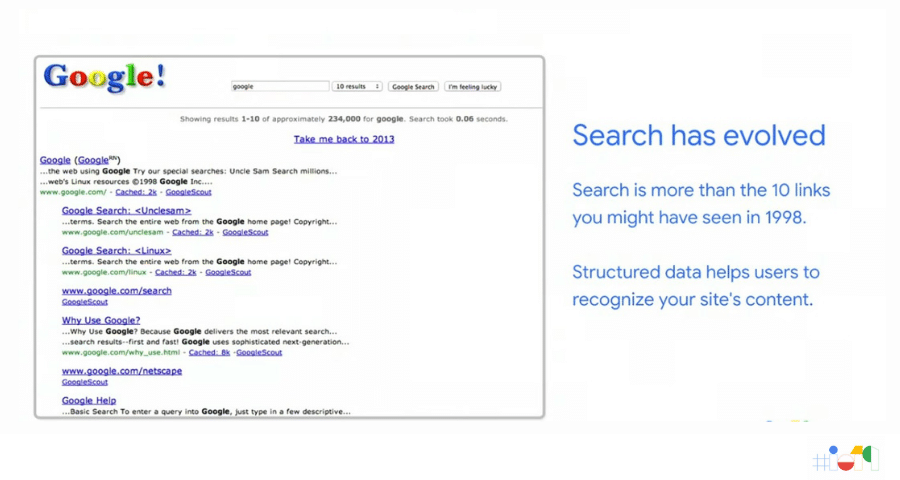
Search engines (who remembers AltaVista?) used to be a collection of blue links, grouped into pages with 10 at a time, in the case of Google.
But Search has evolved a great deal. And now search engines ask for help from those who create content.
Structure your data!
Structured data helps search engines understand your content and show that content to your users in the way that is most relevant to them.
In the beginning, it was the Verb (in text)
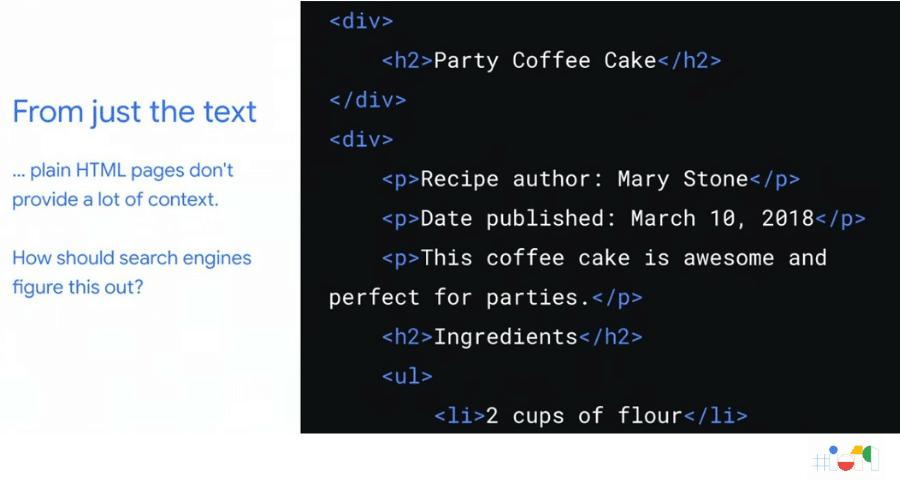
At the beginning of the Internet, before the web became what it is today, we only had text to read—texts and a few images, which took an eternity to load.
Years went by and search engines emerged. They were created to try to provide an organized view of the websites that existed on the Internet. But they had a problem:
The HTML made at the time did not provide any context about what was being said. It was a strictly “visual” markup language.
Until data began to be structured…
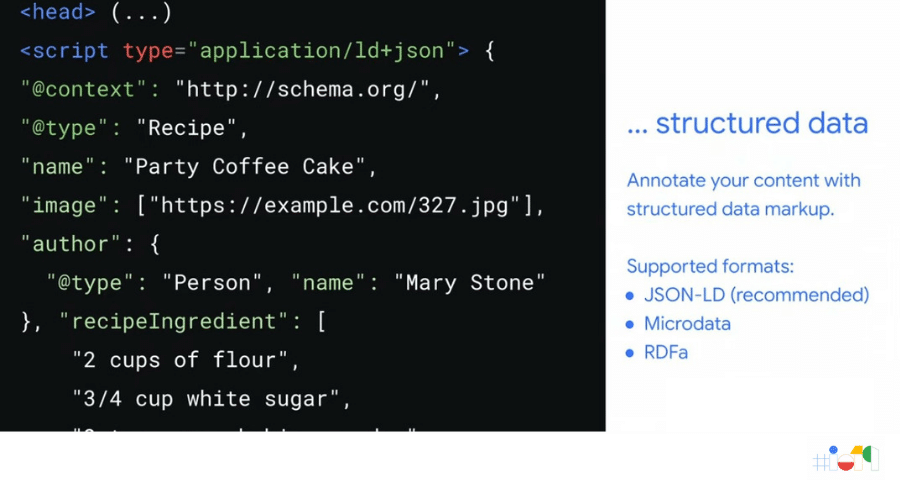
When we mark up our content with schema, one thing happens: search engine algorithms begin to understand what you mean on that page, creating context! And with your code structured semantically, search engines will know what to show and how to show it when your users search for something you have put online.
Mark up the content and test it!
See the rich results Google delivers when you use Structured Data.
Can my page benefit from structured markup?
Yes, of course! Some types of content, due to search engines’ limitations in displaying rich results, benefit more than others.
Some types of rich results available:
- Recipes;
- Step-by-step
- Article
- Local business
- Music
- Recipe
- Critic review
- TV and movies
- Video
- FAQ
- How-to
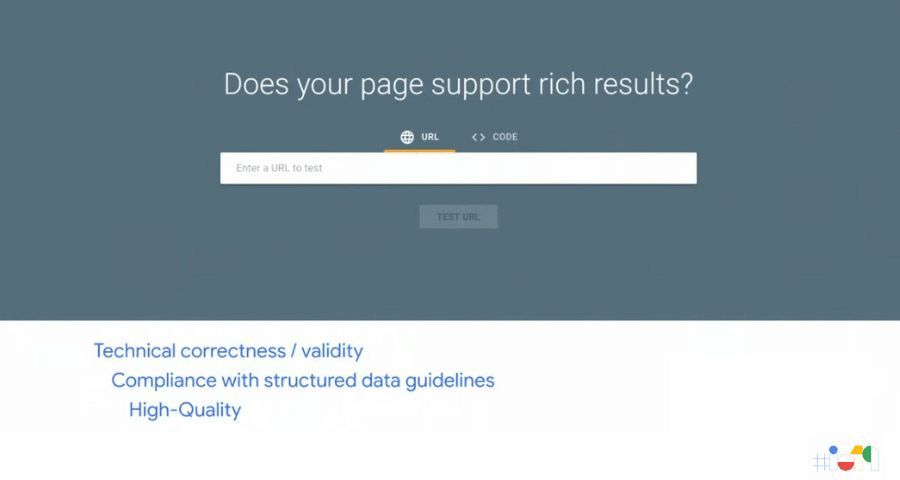
Start creating, testing, and deploying structured data, but above all: do not forget your website quality.
One last tip, straight from Google I/O 2019
Dates matter
If you have a website that creates content regularly, do not forget to display and mark up the dates of what you publish online.
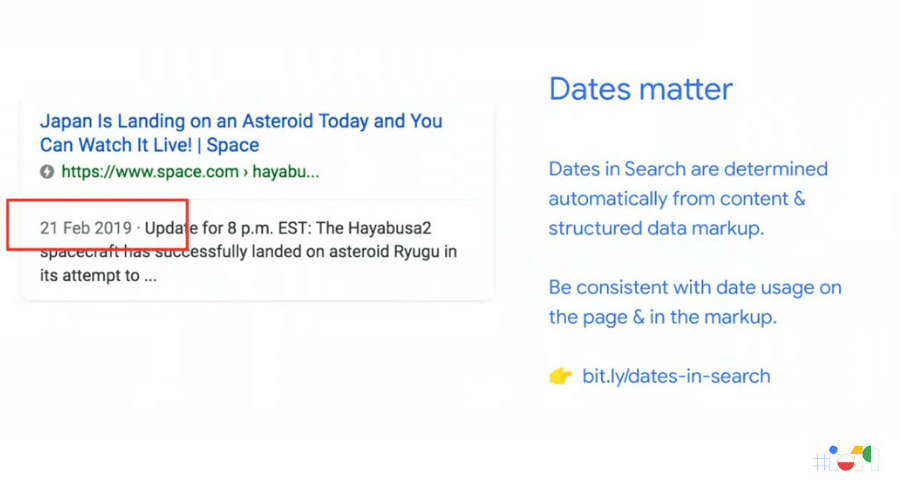
Dates in Search are determined automatically by the content and by the structured markup of your data.
Be consistent: always use the same date format, both in how it is displayed on the page and in your website code.
To learn more, visit: bit.ly/date-in-search
Watch the Google event on structured data
Is it worth using a markup assistant?
Yes, it is worth it. If you do not have the necessary knowledge to mark up your website data on your own, you can use an online tool to mark up your website content, or hire a structured markup specialist.
Structured data markup tools
Below are some good tools I recommend to help you do the markup of your website data on your own:
- Google Structured Data Markup Helper
- Google Structured Data Testing Tool
- Microdata Generator
- Schema Generator
- Schema Markup Generator
Keep in mind that, for most search results that display rich snippets where your website appears, your click-through rate increases.