Esse artigo pode ser lido em:


How to rank on Google?
Making it clear what your site will need to do: create content that is relevant according to your user’s search intent.
Creating content that is aligned with the desires and needs of your users is more complicated than it seems.
More than trying to imagine what they need, it is necessary to know deeply about how Google works today, to know everything about semantics, content creation for the web, and, above all, to know the fundamentals of SEO very well. And we will show you one of the paths to rank on Google in 2019 (20, 21, 22…)!
In the seventh part of the Semantic SEO track we saw how to rank on Google. Create content that is relevant according to your user’s search intent and that is aligned with their desires and needs: that is the answer to the question, that is, to rank well on Google we need to create quality content.
The fundamentals of SEO are still very relevant.
If I need to rank for the term “the best blog about SEO” I will not be naive enough to think that Google will simply place my page in the search.
Today the scenario is more complex. What Google needs, and knows that users need, is information.
Therefore, to appear well in a SERP it is necessary to diversify: I create posts, videos, data, graphics, etc., etc., etc.
In summary:
Google wants you to have the relevant information that the user is looking for.
How does Google work in 2020? See the post Google I/O 2019: what will SEO be like in the future?
If you read the post above, or will read it, you will see that there is something that can be done with your content, which will help you considerably to rise in the results: use structured markup in your texts.
Using structured data also helps you appear in voice search results.
But what is Search Intent and why is this important?
Search intent is the reason a person performs a search.
To be very clear: “Why did this person perform this search?“
Is the intent to learn something? Are they wanting to make a purchase? Are they looking for specific information or even an address on the internet?
No one accesses the search field without a reason. That is what we need to understand, perhaps predict.
And if you work with Marketing, you need to know that this discovery will change your persona’s purchase journey.
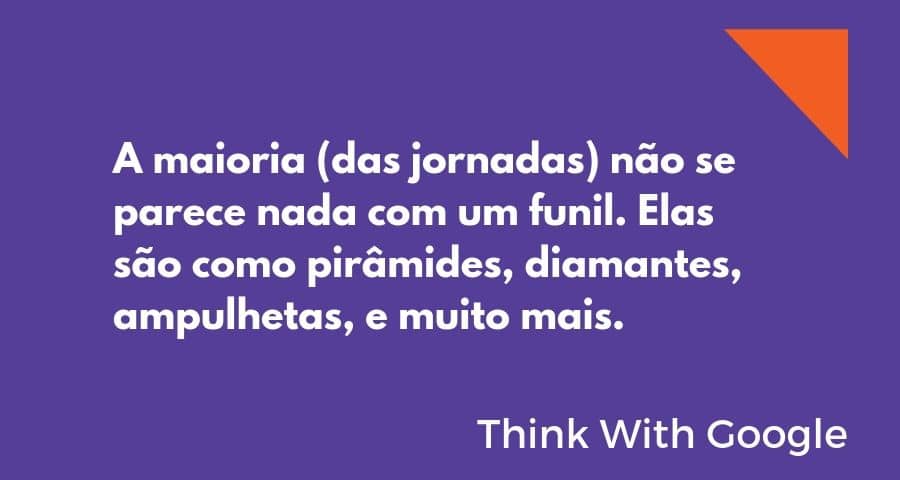
Forget everything you know about Funnels. Whether it is the marketing funnel or the purchase funnel.

Think about how you yourself make an important purchase today. I am not talking about the supermarket, but something like a cell phone, a TV, or your car.
The path we take until we arrive at the perfect choice goes through a very particular journey. Each person uses various devices (cell phone, computer), at completely different moments. There is no longer that straight line that goes from Awareness to Consideration, arriving at the purchase.
The current consumer, regardless of age or gender, takes a path that goes back and forth. That moves from digital to physical in a few moments, and that generates a purchase in months or in minutes.
But one thing is certain: people increasingly use their cell phones to receive answers. And in each question there is an intent.
And it is this process above that has reshaped the work of Marketing today.
And that is why the intent of a search is so important. The intent behind each search must guide the process of creating your content. But first we need to understand the types of intent.
The 4 Types of Search Intent
Now we will help you understand what the main types of search intent are, with some search ideas for each type, and already discuss how, after identifying the intent of the searcher, to create content that meets each moment of this journey. For this we will define which…
The basic types of search intent:
- Informational;
- Navigational;
- Commercial;
- Transactional.
A brief summary for you to create content optimized for search intent:
- Know your audience’s intents deeply. If you use tools like Semrush your work is easier, they have specific functionalities for this, but if you cannot invest, you can do something similar using Google Search Console.
- Pay attention to the words used in searches: they already clearly demonstrate the user’s intent.
How to Rank on Google? Use Google to Your Advantage
The search results page itself, also known as SERP, has the answer to the question above. Find the first intent, even if it is informational, and through it, directly in the results on Google, you will find suggestions of other questions asked.
Advanced Search Results
Google tends to show in some search results some more advanced functionalities. The frequency with which a result like the one shown below appears depends on the search intent.
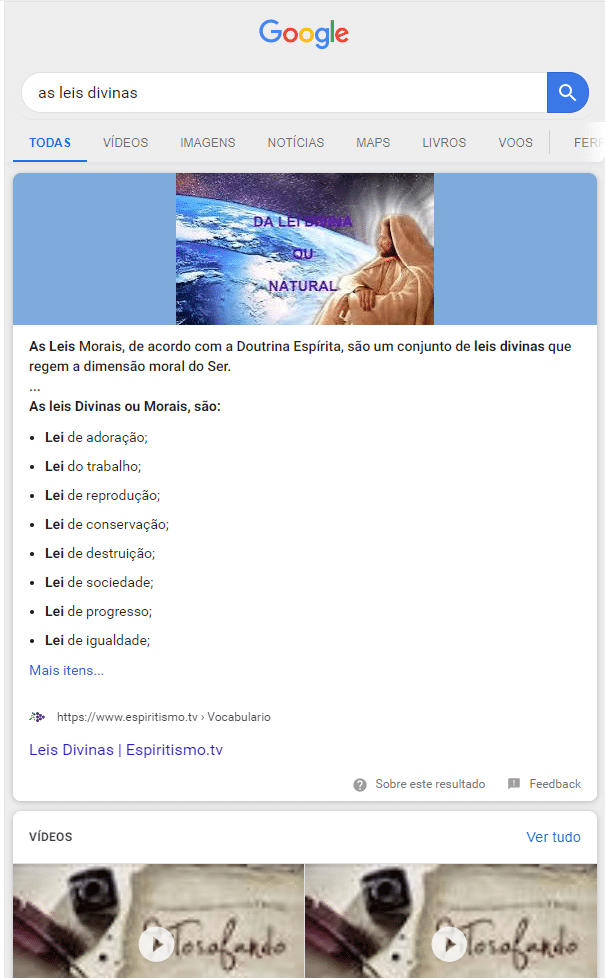
Finding a result like this in a search related to your business indicates the intent of this search, giving you fundamental clues to go deeper into this optimization. But I need to give you a warning: these pages change all the time, and a result like the one above is only a brief snapshot in time.
Let us now move on to the types of searches…
Informational Searches
These are those where the user is looking for some information. They may use terms like SEO, when they want to know something more generic about “Does optimizing a site produce results?“, or even “How to optimize my site in 2019”, where a phrase is used to narrow the results, with the intent of getting more directly to the point.
How to Create Content When the Search Intent Is Informational?
How to create content that aligns with the search intent? Generally this type of search is divided into two categories:
- Generic searches: which use few words and are very investigative. E.g.: SEO
- Specific searches: which use more terms, may be performed after unsatisfactory results generated by the first type. E.g.: “What is structured data?“
If the searched term has an informational intent, the best content to be created is to write a post on your blog giving exactly the information your visitor needs.
Navigational Searches
We can consider this search intent in two ways, currently. An online navigation, where I search for Blog about SEO and found my site, or, when the navigation starts online and ends in the real world, as in the case of a search for “organic pizzeria near me“, with the intent of going to visit the establishment we heard about.
How to Create Content When the Search Intent Is Navigational?
Here we have to divide this content into two very specific areas: if you have a physical business (an office, a store) or if it is online, digital.
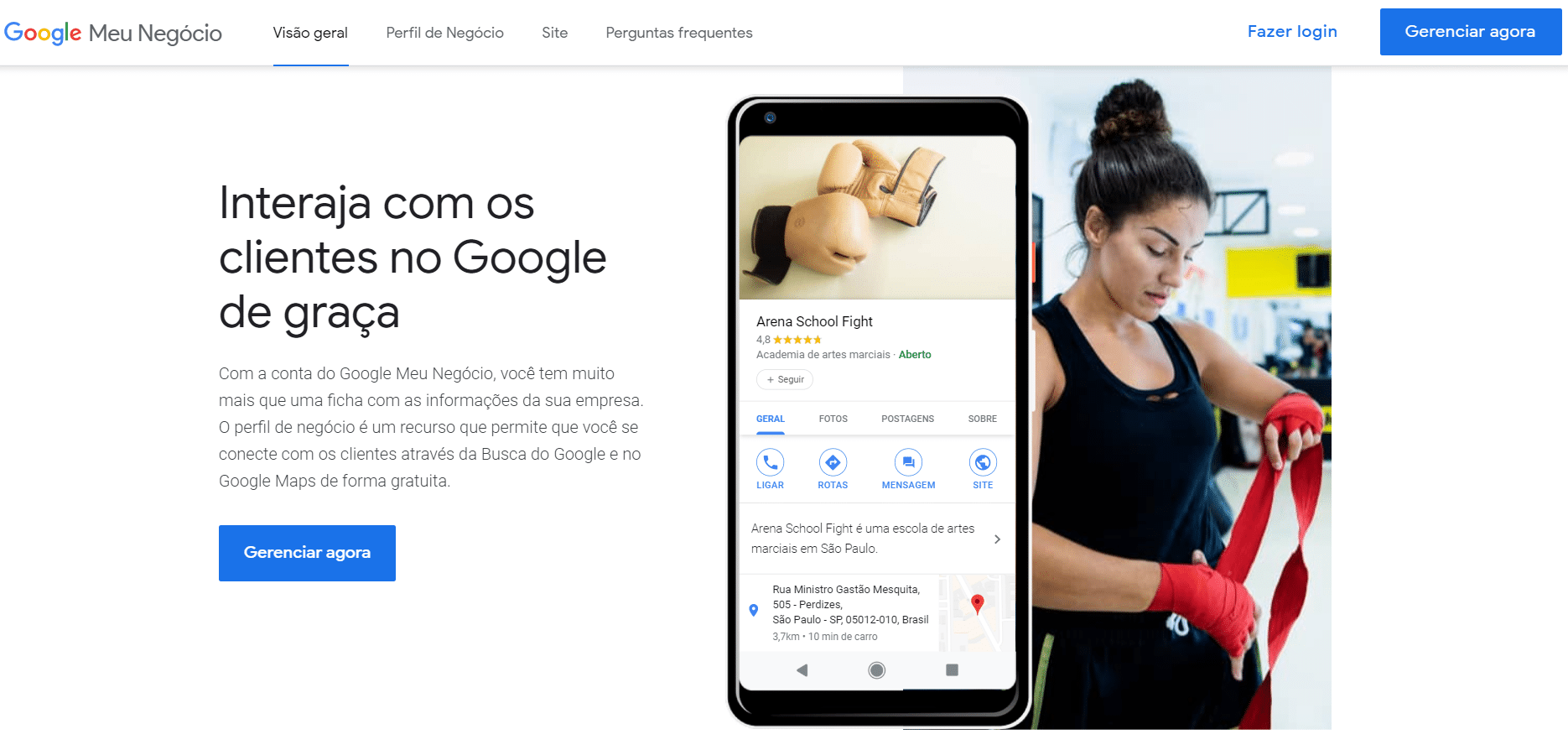
For a physical business you should configure Google My Business. When a search involves the name of your business, the result that appears will have all the necessary data for that visitor to get in touch. In addition, your site should have a Google Maps map with the location of the headquarters, updated phone numbers, and an address. Prefer to place this information in the footer, because it will be repeated throughout the site.
For a digital business your contact page on the site is fundamental, but having some pages created specifically for the services you provide is an interesting idea, since the user may be looking for something that intersects your site with a service they need.
Commercial Searches
Now imagine qu:enhancement-93″ class=”textannotation”>e that this same person who searched for SEO, then for Blog about SEO, and who is now more informed, began to consider hiring an SEO specialist for their site. The search intent commercial, also called Commercial Investigation, is one where the idea of doing business already exists but the intent is to investigate the options better.
How to Create Content When the Search Intent Is Commercial?
The tip is to find the questions your clients may ask when they think about something related to your company. In the case I mentioned above, since my company is myself (my name, my blog), if someone arrives here through a commercial investigation search they should land on a page where I explain in detail what I do, the services I offer (such as site optimization), my clients, case studies, contact, etc.
Transactional Searches
Now finally the intent is to hire an SEO analyst for a digital project. This imaginary person of ours may search for “hire SEO analyst in Porto Alegre” or even “hire SEO specialist“. What matters here is: if they find the Semantic Blog in the result of this search, the chance of hiring me as an optimization service provider is high.
How to Create Content When the Search Intent Is Transactional?
If the identified search intent is transactional, the best content to be created is a page for each of your services and products. Pages that are created to answer each of the searches.
Stop Creating Content for the Average of Your Audience!
Be useful! People tend to respond better when they perceive that we understand their needs, which is why it is so important to create or optimize your content with two objectives in mind:
- Relevance to your consumer;
- Long-term value for your business.
It is necessary to keep in mind that some people perform searches, arrive at your site, stay for a short time, and leave. Others may return several times in a row, some others will spend considerable time understanding what you offer.
Understanding this difference, knowing who these visitors are, their needs, and creating optimized content for each stage in this journey is the difference between a service and a sustainable business.