


Google’s newest update comes, alongside MUM, BERT, and several others, to prioritize content. Ever since Hummingbird, Google—and its fellow admirer-competitors—have been trying to make search as semantic as possible. And in the absence of adherence to—or misuse of—Schema.org, it is in the <main> tag that they begin to look.
In this context, the Helpful Content Update (HCU) sets out to identify quality content produced by humans, for humans. It is a bold proposal. It puts Google face-to-face with content-producing AIs on one side, and poor content producers on the other. To achieve this, it will need to seek support from a group that gains more relevance for Google every year: experts.
Here, we will explain the thesis of experts as Google’s preferred group, and how this impacts content production. Follow the reasoning:
Objective of the Helpful Content Update
The update arrives, like others before it, to defend Google’s greatest asset: trustworthiness. The value of search engines comes from their ability to meet a demand. To fulfill a promise. And that promise is to deliver the answer to the user.
Unlike McDonald’s, where we go expecting a specific hamburger flavor, on Google we go expecting the answer to a question. Like fast food, we want it fast, hot, and tasty.
As a company that seeks profit, Google needs to ensure the relevance of its assets. The greatest of them is the indexing algorithm. By valuing it—and this is where the HCU comes in—the company wins financially and wins on another front we cannot forget: politically.
HCU and financial appreciation
Looking at Google’s numbers, the company continues to value and invest in new business forms. “Other Bets,” Google’s investment segment, has been posting continuous losses for years. This happens because they take risks. They believe that one of the dozens of acquired startups or business models they create will yield monstrous returns.
The HCU goes in the opposite direction: it is a bet on the company’s main asset. Its results will impact the company’s primary capital inflow channel. And therefore, its relevance is not low.
HCU and political appreciation
A constant risk for companies is when they begin to engage with politics. In Brazil, business owners had their tax records breached in a move that will impact their companies. Their image is already tarnished.
On the other hand, scandals such as those involving Eike Batista’s companies show the risks of dealing with politics. Search engines are some of the main responsible parties for decision-making today. The Band debate, the first presidential debate of the year, put YouTube metrics side by side with career journalists. Search engines are political.
The HCU also comes into play as a strategy to politically exempt itself. It is no coincidence that the tool claims to “average out expert opinions.” Expertise that was developed beforehand and solidified during the pandemic will also be used in more specific niche contexts.
How the Helpful Content Update works
The impacts and details of the HCU are yet to be seen. The update, which has not yet completed its full rollout, will impact sites. SEO gurus will look for case studies to attest to its quality and sell the “how-to” of the process. And until then, John Mueller might say something.
What we can verify is Google’s history and what has already been done, in addition to the objectives (listed above). The HCU emerges following MUM. The Multitask Unified Model creates consensus among experts using AI, and then delivers the results.
Both are part of the same movement by Google: one that is both algorithmic and political.
The aspects we know Google analyzes are page metadata. Their proper structuring, starting from a semantic viewpoint, will optimize page indexing. What we can perceive is that content — the body of the page or article — will come into play, with authoritative terms and reference terms being calibrated to inform the algorithm of the author’s degree of expertise.
And it is precisely at the interface between metadata and content that experts beat generalists.
Author metadata for the HCU
Author metadata is more detailed the higher the portal’s authority. In the finance niche, for example, few are ahead of Investopedia in the English language. And its semantic structure for author, reviewer, and fact-checker in the metadata is impeccable.
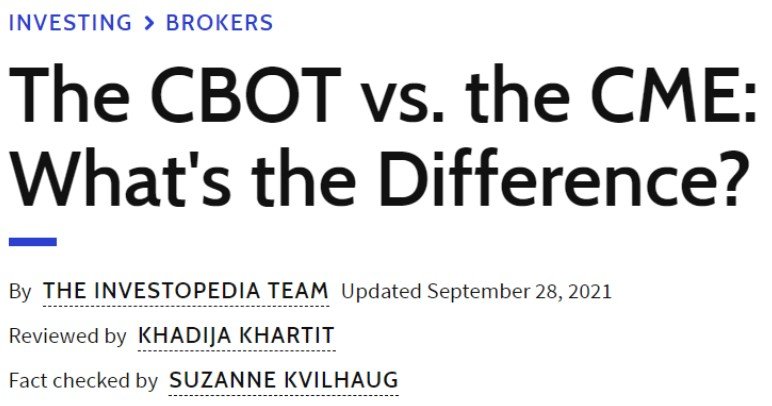
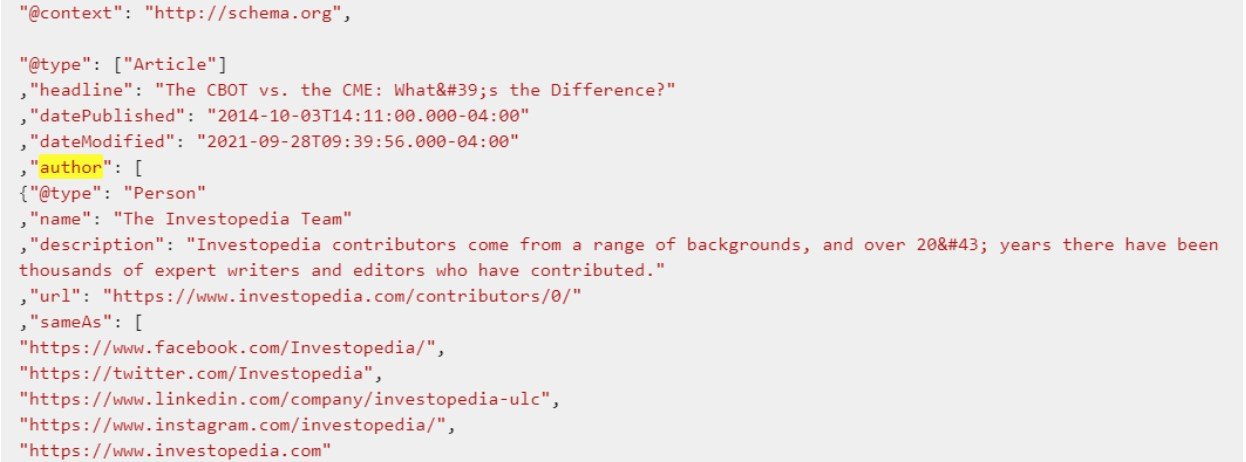
The CBOT vs. the CME: What’s the Difference? (investopedia.com)
Here we see the level of detail Investopedia reaches when defining its authors. The degree of specificity remains the same for the reviewer and the fact-checker. Authority arguments and other metadata (links to social media and sites, for example) are used in abundance. The goal? To build credibility for the mechanism.
At this point we enter conjecture, but considering that these data tend to repeat across pages, it would be a major waste not to use them to evaluate rankings and cross-reference statistics. If I know that the “Investopedia Team” publishes dozens of articles on the concept monthly, and that it is read, accessed, and meets readers’ demand for information, then the Investopedia entity must have some value. Right?
From this point onward, author metadata acquires semantics. The Investopedia Team writes in this manner (article 1). And also in this other manner (article 2). After 40, 60 articles, it gains an identity. However, if I put 60 laypeople to write these articles, what do I get? Inconsistency and incompetence.
How to optimize author metadata
Author metadata for the HCU can be optimized. The important thing to remember is that this data provides semantic context, and may reference other entities. The closer they are to your semantic universe, the more relevant your mentions in the author metadata become.
This short checklist can help you build the biography for your metatag:author.
- Educational institutions – acronym, course, and university (if applicable);
- Years of experience;
- Places where you have worked;
- Positions you have held;
- Published articles (excluding scientific papers);
- Published books.
Quality of authored content
Now the quality of the authored content will be analyzed. Once I write my texts, I ensure uniformity. Certain expressions, figures of speech, and anecdotes tend to repeat. The subjects in which I am an expert also appear more often. They become clearer. And I make the search engine’s job easier.
Consequently, if I am an authority, the author metadata associated with me tends to receive this score. It is tied to a valuable product. Relevant information. And the next quality text endorses this impression. Just like the next one. And the next. And so on.
The author—both in metadata and in flesh and bone—will need to combine both content experience (a term I first saw in a post by Gustavo Rodrigues) and content quality. In the finance market, this is very common. Terms like Capex, net income, amortization, and technical analysis are for the “initiated” and signal competence. On the other hand, they drive away the bulk of readers.
How to optimize your content experience
Unlike past practices, these updates require you to stop investing in repeating search terms at regular intervals. Do not even think about search terms. The goal will be to contextualize information in an engaging way.
Here it is worth understanding the dichotomy between easy and difficult versus simple and complex. What is complex can be easy, and what is simple can be difficult. The goal of content experience will be to optimize complex content so that it becomes increasingly easy, and to understand that simple content has no excuse for being difficult.
We have thought of some strategies that will help develop the information consumption experience:
- Be clear about the search intent: “What time is it” does not call for an answer longer than 5 digits (including the “:”). On the other hand, “how to do semantic SEO on my blog” might require more than 3K words. This intent will guide your content.
- Seek dialogism: Enjoyable content is dialogic. It is no coincidence that we want to talk to someone when we have a problem with the bank, or when we feel stuck during asynchronous and remote classes. Dialogism appears in short sentences, sitting halfway between formality and avoiding complex terms.
- Write and revise: Original content, the first draft, will rarely be the best one. Even with years of practice, there will be a need to review the content. If possible, set aside a few hours between finishing and revising. The ideal is a full day.
- Grammar matters: A poorly written text is painful, much like a bumpy road. The view may be wonderful, but it makes understanding difficult. Definitely not showing care for the user.
- Stay within your scope: Contrary to what social media preaches, we do not seek information from those who know everything about everything. At least, Google does not want that. So aim at your expertise. Value your study.
Signal limits: Since we do not know everything, make that explicit. “We will not delve into this matter as we are not (insert a profession here).” This gesture enhances your credibility, showing that you know your limits.
How to make both work together?
Author metadata and content quality need to work together to inform Google that you deserve to be read. In the meantime, there are ways to make them work together, and this approach becomes clear in the context of Investopedia: revision.
The “reviewedby” metadata argument allows the injection of a second author, enabling two possible combinations:
| Author | Reviewer | Profile |
| SEO copywriter | Expert | Fact-checker |
| Expert | SEO copywriter | Qualifier |
In the “Fact-checker” profile, the Expert will work on top of an SEO copywriting draft. They need to have some grasp of the “how” and “why” of an argument, but they will bring precision to the use of terms. Artistic freedom is slightly pruned, but factual accuracy builds credibility.
In the “Qualifier” profile, the informative product will feature an Expert writing something more technical, and the SEO copywriter will optimize it. This leads to anecdotes or storytelling emerging in the middle of the text, endorsed by the technical explanations. It also favors something Google already invests in: fact-checking.
Ever since the launch of the search for checks on Google and the contracts between the company and Poynter, fact-checking has gained paramount attention from the search giant. This leads to a scenario where third-party validation is encouraged. And that is what a reviewer does: brings consensus to a page’s metadata.
This article was written by Victor Gabry, UX Researcher and search copywriter at Americanas.com. Victor seeks to specialize in the areas of technology (SaaS) and finance to make technical subjects easy to consume.
source/Index_term”,”http://de.dbpedia.org/resource/Deskriptor”,”http://en.dbpedia.org/resource/Index_term”,”http://es.dbpedia.org/resource/Encabezamientos_de_materia”,”http://fi.dbpedia.org/resource/Avainsana”,”http://fr.dbpedia.org/resource/Mot_clé_(sciences_de_l’information_et_des_bibliothèques)”,”http://hr.dbpedia.org/resource/Deskriptor_(informacijske_znanosti)”,”http://id.dbpedia.org/resource/Kata_kunci”,”http://it.dbpedia.org/resource/Descrittore_(informazione)”,”http://lv.dbpedia.org/resource/Atslēgvārds_(informācijas_meklēšana)”,”http://pl.dbpedia.org/resource/Keyword”,”http://pt.dbpedia.org/resource/Palavra-chave”,”http://rdf.freebase.com/ns/m.0fr1w6″,”http://ru.dbpedia.org/resource/Ключевое_слово”,”http://uk.dbpedia.org/resource/Ключове_слово”],”types”:[“thing”]},”annotations”:{“urn:enhancement-7940e4fa-5582-436e-b889-3b2e6db39b24”:{“start”:12182,”end”:12192,”text”:”tecnologia”}},”id”:”http://data.wordlift.io/wl01797/entity/tecnologia”,”label”:”Tecnologia”,”mainType”:”creative-work”,”occurrences”:[“urn:enhancement-7940e4fa-5582-436e-b889-3b2e6db39b24″],”sameAs”:[“http://be.dbpedia.org/resource/Тэхналогія”,”http://bg.dbpedia.org/resource/Технология”,”http://ca.dbpedia.org/resource/Tecnologia”,”http://cs.dbpedia.org/resource/Technologie”,”http://da.dbpedia.org/resource/Teknologi”,”http://dbpedia.org/resource/Technology”,”http://de.dbpedia.org/resource/Technologie”,”http://en.dbpedia.org/resource/Technology”,”http://es.dbpedia.org/resource/Tecnología”,”http://et.dbpedia.org/resource/Tehnoloogia”,”http://fi.dbpedia.org/resource/Teknologia”,”http://fr.dbpedia.org/resource/Technologie”,”http://hr.dbpedia.org/resource/Tehnologija”,”http://hu.dbpedia.org/resource/Technológia”,”http://id.dbpedia.org/resource/Teknologi”,”http://is.dbpedia.org/resource/Tækni”,”http://it.dbpedia.org/resource/Tecnologia”,”http://lt.dbpedia.org/resource/Technologija”,”http://lv.dbpedia.org/resource/Tehnoloģija”,”http://nl.dbpedia.org/resource/Technologie”,”http://no.dbpedia.org/resource/Teknologi”,”http://pl.dbpedia.org/resource/Technologia”,”http://pt.dbpedia.org/resource/Tecnologia”,”http://rdf.freebase.com/ns/m.07c1v”,”http://ro.dbpedia.org/resource/Tehnologie”,”http://ru.dbpedia.org/resource/Технология”,”http://sk.dbpedia.org/resource/Technológia”,”http://sl.dbpedia.org/resource/Tehnologija”,”http://sr.dbpedia.org/resource/Технологија”,”http://sv.dbpedia.org/resource/Teknologi”,”http://tr.dbpedia.org/resource/Teknoloji”,”http://uk.dbpedia.org/resource/Технологія”],”types”:[“creative-work”]},”annotations”:{“urn:enhancement-86b1f1d0-649f-4acf-8cc6-e2e911d12dc4”:{“start”:7086,”end”:7094,”text”:”buscador”}},”id”:”http://data.wordlift.io/wl01797/entity/motor_de_busca”,”label”:”Motor de busca”,”mainType”:”thing”,”occurrences”:[“urn:enhancement-86b1f1d0-649f-4acf-8cc6-e2e911d12dc4″],”sameAs”:[“http://be.dbpedia.org/resource/Пошукавая_сістэма”,”http://bg.dbpedia.org/resource/Търсачка”,”http://ca.dbpedia.org/resource/Motor_de_cerca”,”http://cs.dbpedia.org/resource/Vyhledávač”,”http://da.dbpedia.org/resource/Søgemaskine”,”http://dbpedia.org/resource/Search_engine_(computing)”,”http://de.dbpedia.org/resource/Suchmaschine”,”http://en.dbpedia.org/resource/Search_engine_(computing)”,”http://es.dbpedia.org/resource/Motor_de_búsqueda”,”http://et.dbpedia.org/resource/Otsingumootor”,”http://fi.dbpedia.org/resource/Hakukone”,”http://hr.dbpedia.org/resource/Tražilica”,”http://hu.dbpedia.org/resource/Keresőmotor”,”http://it.dbpedia.org/resource/Motore_di_ricerca”,”http://lv.dbpedia.org/resource/Meklētājprogramma”,”http://nl.dbpedia.org/resource/Zoekmachine”,”http://no.dbpedia.org/resource/Søkemotor”,”http://pl.dbpedia.org/resource/Wyszukiwarka_internetowa”,”http://pt.dbpedia.org/resource/Motor_de_busca”,”http://rdf.freebase.com/ns/m.06xw2″,”http://ro.dbpedia.org/resource/Motor_de_căutare”,”http://ru.dbpedia.org/resource/Поисковая_машина”,”http://sk.dbpedia.org/resource/Search_engine”,”http://sl.dbpedia.org/resource/Spletni_iskalnik”,”http://sv.dbpedia.org/resource/Söktjänst”,”http://tr.dbpedia.org/resource/Arama_motoru”,”http://uk.dbpedia.org/resource/Пошукова_система”,”http://yago-knowledge.org/resource/Search_engine_(computing)”],”types”:[“thing”]},”annotations”:{“urn:enhancement-ecdaca96-09f2-4219-8efe-1642f548b3e1”:{“start”:8612,”end”:8615,”text”:”ser”},”urn:enhancement-d033b28d-9df3-4fdb-8a83-b32f93f9f281″:{“start”:8446,”end”:8449,”text”:”ser”},”urn:enhancement-28611f27-5146-4c5d-befd-ed838b4a151a”:{“start”:3173,”end”:3176,”text”:”ser”},”urn:enhancement-e4df8931-9d2e-41d3-a73a-977a8794ca84″:{“start”:10331,”end”:10334,”text”:”ser”},”urn:enhancement-544686eb-c3da-4f5b-a591-14f3bd76522e”:{“start”:9661,”end”:9664,”text”:”ser”},”urn:enhancement-7d205c01-6268-49fa-b6af-8e8e28a49019″:{“start”:8411,”end”:8414,”text”:”ser”},”urn:enhancement-08e5e90c-f3d5-4c00-ade4-e59e67b61437″:{“start”:6239,”end”:6242,”text”:”ser”}},”id”:”http://data.wordlift.io/wl01797/entity/ser”,”label”:”Ser”,”mainType”:”thing”,”occurrences”:[“urn:enhancement-28611f27-5146-4c5d-befd-ed838b4a151a”,”urn:enhancement-08e5e90c-f3d5-4c00-ade4-e59e67b61437″,”urn:enhancement-7d205c01-6268-49fa-b6af-8e8e28a49019″,”urn:enhancement-d033b28d-9df3-4fdb-8a83-b32f93f9f281″,”urn:enhancement-ecdaca96-09f2-4219-8efe-1642f548b3e1″,”urn:enhancement-544686eb-c3da-4f5b-a591-14f3bd76522e”,”urn:enhancement-e4df8931-9d2e-41d3-a73a-977a8794ca84″],”sameAs”:[“http://bg.dbpedia.org/resource/Битие”,”http://cs.dbpedia.org/resource/Bytí”,”http://dbpedia.org/resource/Being”,”http://de.dbpedia.org/resource/Sein”,”http://en.dbpedia.org/resource/Being”,”http://es.dbpedia.org/resource/Ser”,”http://et.dbpedia.org/resource/Olemine”,”http://fi.dbpedia.org/resource/Oleminen”,”http://fr.dbpedia.org/resource/Être”,”http://hr.dbpedia.org/resource/Bitak”,”http://is.dbpedia.org/resource/Verund”,”http://it.dbpedia.org/resource/Essere”,”http://nl.dbpedia.org/resource/Zijn”,”http://pl.dbpedia.org/resource/Byt”,”http://pt.dbpedia.org/resource/Ser”,”http://ru.dbpedia.org/resource/Бытие”,”http://sk.dbpedia .org/resource/Bytie”,”http://sl.dbpedia.org/resource/Bivajoče”,”http://sr.dbpedia.org/resource/Биће”,”http://tr.dbpedia.org/resource/Varlık”,”http://uk.dbpedia.org/resource/Буття”],”types”:[“thing”]},”annotations”:{“urn:enhancement-12734f4c-e35c-4aa7-9b39-4dff59b5cdbb”:{“start”:461,”end”:469,”text”:”content”},”urn:enhancement-0fc7dc05-e55c-46ff-b245-0d150df91ae8″:{“start”:93,”end”:101,”text”:”content”},”urn:enhancement-9391f444-9e73-4486-bad7-90960e10dcaa”:{“start”:9333,”end”:9341,”text”:”content”},”urn:enhancement-2e295194-cac3-4350-907e-96861f7885bb”:{“start”:7872,”end”:7880,”text”:”content”},”urn:enhancement-a1c945bc-2b69-4554-96d3-74285a15a0f1″:{“start”:599,”end”:607,”text”:”content”},”urn:enhancement-56d95a3b-8e83-4694-9321-c6b93b77c68e”:{“start”:645,”end”:653,”text”:”content”},”urn:enhancement-c3bc399e-e137-4ffe-b4e7-30daf907fa74″:{“start”:9452,”end”:9460,”text”:”content”},”urn:enhancement-6066cfd6-fa8e-4302-a262-70353bb1596b”:{“start”:8508,”end”:8516,”text”:”content”},”urn:enhancement-048074e8-8ddc-45a1-9c6f-25d3dcdc0367″:{“start”:4395,”end”:4403,”text”:”content”},”urn:enhancement-978fe10c-becb-4b62-b1f7-c0edb7b86eab”:{“start”:905,”end”:913,”text”:”content”},”urn:enhancement-e8527202-b81e-4371-9fc5-7e30fbb20b97″:{“start”:8965,”end”:8973,”text”:”content”},”urn:enhancement-faa0d254-48e3-425f-842c-ccbcbc5702c9″:{“start”:6833,”end”:6841,”text”:”content”},”urn:enhancement-4afb8696-3e5b-40df-8fae-dc20aee99d75″:{“start”:9023,”end”:9031,”text”:”content”},”urn:enhancement-6984e66a-2f8a-49fe-84d2-287de6041126″:{“start”:10256,”end”:10264,”text”:”content”},”urn:enhancement-42590582-df48-4a8e-b411-31cae5e3a7e2″:{“start”:4623,”end”:4631,”text”:”content”},”urn:enhancement-b3ce90e7-5fd9-492b-9481-02e2dfcf6ff8″:{“start”:7459,”end”:7467,”text”:”content”}},”id”:”http://data.wordlift.io/wl01797/entity/conteudo”,”label”:”Content”,”mainType”:”thing”,”occurrences”:[“urn:enhancement-0fc7dc05-e55c-46ff-b245-0d150df91ae8″,”urn:enhancement-12734f4c-e35c-4aa7-9b39-4dff59b5cdbb”,”urn:enhancement-a1c945bc-2b69-4554-96d3-74285a15a0f1″,”urn:enhancement-56d95a3b-8e83-4694-9321-c6b93b77c68e”,”urn:enhancement-978fe10c-becb-4b62-b1f7-c0edb7b86eab”,”urn:enhancement-048074e8-8ddc-45a1-9c6f-25d3dcdc0367″,”urn:enhancement-42590582-df48-4a8e-b411-31cae5e3a7e2″,”urn:enhancement-faa0d254-48e3-425f-842c-ccbcbc5702c9″,”urn:enhancement-b3ce90e7-5fd9-492b-9481-02e2dfcf6ff8″,”urn:enhancement-2e295194-cac3-4350-907e-96861f7885bb”,”urn:enhancement-6066cfd6-fa8e-4302-a262-70353bb1596b”,”urn:enhancement-e8527202-b81e-4371-9fc5-7e30fbb20b97″,”urn:enhancement-4afb8696-3e5b-40df-8fae-dc20aee99d75″,”urn:enhancement-9391f444-9e73-4486-bad7-90960e10dcaa”,”urn:enhancement-c3bc399e-e137-4ffe-b4e7-30daf907fa74″,”urn:enhancement-6984e66a-2f8a-49fe-84d2-287de6041126″],”sameAs”:[],”types”:[“thing”]},”annotations”:{“urn:enhancement-f4bf3135-9cfa-4f4a-b0f0-e9baea7339f6”:{“start”:7444,”end”:7455,”text”:”experience”},”urn:enhancement-efdff100-719d-4f49-a059-d488bb7015a7″:{“start”:6637,”end”:6648,”text”:”experience”},”urn:enhancement-f344a550-8b80-42c2-b2a4-175f6166ab9d”:{“start”:8691,”end”:8702,”text”:”experience”}},”id”:”http://data.wordlift.io/wl01797/entity/experiencia_2″,”label”:”Experience”,”mainType”:”thing”,”occurrences”:[“urn:enhancement-efdff100-719d-4f49-a059-d488bb7015a7″,”urn:enhancement-f4bf3135-9cfa-4f4a-b0f0-e9baea7339f6″,”urn:enhancement-f344a550-8b80-42c2-b2a4-175f6166ab9d”],”sameAs”:[“http://ca.dbpedia.org/resource/Experiència”,”http://cs.dbpedia.org/resource/Zkušenost”,”http://da.dbpedia.org/resource/Erfaring”,”http://dbpedia.org/resource/Experience”,”http://de.dbpedia.org/resource/Erfahrung”,”http://en.dbpedia.org/resource/Experience”,”http://es.dbpedia.org/resource/Experiencia”,”http://et.dbpedia.org/resource/Kogemus”,”http://fi.dbpedia.org/resource/Kokemus”,”http://fr.dbpedia.org/resource/Expérience”,”http://hr.dbpedia.org/resource/Iskustvo”,”http://id.dbpedia.org/resource/Pengalaman”,”http://is.dbpedia.org/resource/Reynsla”,”http://it.dbpedia.org/resource/Esperienza”,”http://nl.dbpedia.org/resource/Ervaring”,”http://no.dbpedia.org/resource/Erfaring”,”http://pl.dbpedia.org/resource/Doświadczenie”,”http://pt.dbpedia.org/resource/Experiência_(filosofia)”,”http://ro.dbpedia.org/resource/Experiență”,”http://ru.dbpedia.org/resource/Опытное_знание”,”http://sk.dbpedia.org/resource/Skúsenosť”,”http://sr.dbpedia.org/resource/Iskustvo”,”http://sv.dbpedia.org/resource/Erfarenhet”,”http://tr.dbpedia.org/resource/Tecrübe”,”http://uk.dbpedia.org/resource/Досвід”],”types”:[“thing”]},”annotations”:{“urn:enhancement-261d4f7f-ae7d-4cbc-a5dc-15b15b5b78a3”:{“start”:11694,”end”:11699,”text”:”search”},”urn:enhancement-ae5ff226-24ff-497d-b175-b28077f73b52″:{“start”:191,”end”:196,”text”:”search”},”urn:enhancement-7a026904-8c91-44f4-b65c-0f53e4a17dc4″:{“start”:8768,”end”:8773,”text”:”search”},”urn:enhancement-9ddc2684-9f9c-4bfb-a110-f75e6a442da0″:{“start”:11833,”end”:11839,”text”:”searches”},”urn:enhancement-1422ae4f-24bd-4fb1-a41c-c045f4a0e5cf”:{“start”:1563,”end”:1568,”text”:”search”},”urn:enhancement-46dd96d0-05fb-4e4b-832e-065a375e6501″:{“start”:12147,”end”:12152,”text”:”search”}},”id”:”http://data.wordlift.io/wl01797/entity/algoritmo_de_busca”,”label”:”Search algorithm”,”mainType”:”creative-work”,”occurrences”:[“urn:enhancement-ae5ff226-24ff-497d-b175-b28077f73b52″,”urn:enhancement-1422ae4f-24bd-4fb1-a41c-c045f4a0e5cf”,”urn:enhancement-7a026904-8c91-44f4-b65c-0f53e4a17dc4″,”urn:enhancement-261d4f7f-ae7d-4cbc-a5dc-15b15b5b78a3″,”urn:enhancement-9ddc2684-9f9c-4bfb-a110-f75e6a442da0″,”urn:enhancement-46dd96d0-05fb-4e4b-832e-065a375e6501″],”sameAs”:[“http://bg.dbpedia.org/resource/Алгоритъм_за_търсене”,”http://dbpedia.org/resource/Search_algorithm”,”http://de.dbpedia.org/resource/Suchverfahren”,”http://en.dbpedia.org/resource/Search_algorithm”,”http://es.dbpedia.org/resource/Algoritmo_de_búsqueda”,”http://fi.dbpedia.org/resource/Hakualgoritmi”,”http://fr.dbpedia.org/resource/Algorithme_de_recherche”,”http://hu.dbpedia.org/resource /Keresőalgoritmus”,”http://id.dbpedia.org/resource/Algoritma_pencarian”,”http://it.dbpedia.org/resource/Algoritmo_di_ricerca”,”http://nl.dbpedia.org/resource/Zoekalgoritme”,”http://pt.dbpedia.org/resource/Algoritmo_de_busca”,”http://rdf.freebase.com/ns/m.06_xd”,”http://sr.dbpedia.org/resource/Алгоритми_претраживања”,”http://tr.dbpedia.org/resource/Arama_algoritmaları”,”http://yago-knowledge.org/resource/Search_algorithm”],”types”:[“creative-work”]},”annotations”:{“urn:enhancement-0994fd88-7e6b-411a-970f-b6e1840e51b7”:{“start”:8876,”end”:8889,”text”:”SEO semântico”}},”id”:”http://data.wordlift.io/wl01797/entity/seo_semantico”,”label”:”Semantic SEO”,”mainType”:”thing”,”occurrences”:[“urn:enhancement-0994fd88-7e6b-411a-970f-b6e1840e51b7″],”sameAs”:[“http://data.wordlift.io/wl0221/entity/seo__semantico”],”types”:[“thing”]},”annotations”:{“urn:enhancement-1bdfb7c3-f492-4cbb-be15-f13223dc4001”:{“start”:2845,”end”:2853,”text”:”métricas”}},”id”:”http://data.wordlift.io/wl01797/entity/metricas_2″,”label”:”Metrics”,”mainType”:”thing”,”occurrences”:[“urn:enhancement-1bdfb7c3-f492-4cbb-be15-f13223dc4001″],”sameAs”:[“http://dbpedia.org/resource/Software_metric”,”http://de.dbpedia.org/resource/Softwaremetrik”,”http://en.dbpedia.org/resource/Software_metric”,”http://id.dbpedia.org/resource/Metrik_perangkat_lunak”,”http://it.dbpedia.org/resource/Metriche_software”,”http://pl.dbpedia.org/resource/Metryka_oprogramowania”],”types”:[“thing”]},”annotations”:{“urn:enhancement-59e09600-aebc-4598-a962-8359dde25989”:{“start”:6307,”end”:6316,”text”:”semântico”},”urn:enhancement-2f88cbb5-16e6-4ff7-8265-4485a95e3bcd”:{“start”:6400,”end”:6409,”text”:”semântico”}},”id”:”http://data.wordlift.io/wl01797/entity/semantico”,”label”:”Semântico Serviços Em Tecnologia da Informacao Eireli”,”mainType”:”organization”,”occurrences”:[“urn:enhancement-59e09600-aebc-4598-a962-8359dde25989″,”urn:enhancement-2f88cbb5-16e6-4ff7-8265-4485a95e3bcd”],”sameAs”:[],”types”:[“organization”]},”annotations”:{“urn:enhancement-4eff2a50-66ba-46c0-9a81-442fe094cd5b”:{“start”:2119,”end”:2126,”text”:”negócio”},”urn:enhancement-42af9aef-2c43-4cdb-b18d-aa79ed041fcd”:{“start”:1910,”end”:1917,”text”:”negócio”}},”id”:”http://data.wordlift.io/wl01797/entity/negocio”,”label”:”Business”,”mainType”:”thing”,”occurrences”:[“urn:enhancement-42af9aef-2c43-4cdb-b18d-aa79ed041fcd”,”urn:enhancement-4eff2a50-66ba-46c0-9a81-442fe094cd5b”],”sameAs”:[“http://be.dbpedia.org/resource/Бізнес”,”http://bg.dbpedia.org/resource/Бизнес”,”http://ca.dbpedia.org/resource/Negoci”,”http://cs.dbpedia.org/resource/Podnikání”,”http://da.dbpedia.org/resource/Erhverv”,”http://dbpedia.org/resource/Business”,”http://de.dbpedia.org/resource/Unternehmen”,”http://en.dbpedia.org/resource/Business”,”http://es.dbpedia.org/resource/Negocio”,”http://fi.dbpedia.org/resource/Liiketoiminta”,”http://fr.dbpedia.org/resource/Entreprise”,”http://hr.dbpedia.org/resource/Poduzeće”,”http://hu.dbpedia.org/resource/Cég”,”http://id.dbpedia.org/resource/Bisnis”,”http://is.dbpedia.org/resource/Viðskipti”,”http://it.dbpedia.org/resource/Business”,”http://lt.dbpedia.org/resource/Verslas”,”http://lv.dbpedia.org/resource/Uzņēmējdarbība”,”http://nl.dbpedia.org/resource/Bedrijf”,”http://no.dbpedia.org/resource/Næringsliv”,”http://pl.dbpedia.org/resource/Biznes”,”http://pt.dbpedia.org/resource/Negócio”,”http://rdf.freebase.com/ns/m.09s1f”,”http://ro.dbpedia.org/resource/Afacere”,”http://ru.dbpedia.org/resource/Предпринимательство”,”http://sk.dbpedia.org/resource/Podnikanie”,”http://sl.dbpedia.org/resource/Poslovanje”,”http://sq.dbpedia.org/resource/Biznesi”,”http://sr.dbpedia.org/resource/Бизнис”,”http://sv.dbpedia.org/resource/Näringsliv”,”http://uk.dbpedia.org/resource/Бізнес”],”types”:[“thing”]},”annotations”:{“urn:enhancement-e2898527-05b4-425d-a7a4-762dee29b114”:{“start”:3480,”end”:3492,”text”:”John Mueller”}},”id”:”http://data.wordlift.io/wl01797/entity/john_mueller”,”label”:”John Mueller”,”mainType”:”person”,”occurrences”:[“urn:enhancement-e2898527-05b4-425d-a7a4-762dee29b114″],”sameAs”:[“http://www.wikidata.org/entity/Q94604927″],”types”:[“person”]},”annotations”:{“urn:enhancement-ee5782bc-7fb9-4764-97fe-60c71769f1f7”:{“start”:1650,”end”:1659,”text”:”algoritmo”},”urn:enhancement-b41761f6-b0d2-4cb0-bd75-7ba1c579bb18″:{“start”:4536,”end”:4545,”text”:”algoritmo”}},”id”:”http://data.wordlift.io/wl01797/entity/algoritmo”,”label”:”Algorithm”,”mainType”:”creative-work”,”occurrences”:[“urn:enhancement-ee5782bc-7fb9-4764-97fe-60c71769f1f7″,”urn:enhancement-b41761f6-b0d2-4cb0-bd75-7ba1c579bb18″],”sameAs”:[],”types”:[“creative-work”]},”annotations”:{“urn:enhancement-b151a381-c66d-46fc-87f8-5ea6dd0c18a4”:{“start”:2974,”end”:2984,”text”:”estratégia”}},”id”:”http://data.wordlift.io/wl01797/entity/estrategia”,”label”:”Strategy”,”mainType”:”thing”,”occurrences”:[“urn:enhancement-b151a381-c66d-46fc-87f8-5ea6dd0c18a4″],”sameAs”:[“http://be.dbpedia.org/resource/Стратэгія”,”http://bg.dbpedia.org/resource/Стратегия”,”http://ca.dbpedia.org/resource/Estratègia”,”http://da.dbpedia.org/resource/Strategi”,”http://dbpedia.org/resource/Strategy”,”http://en.dbpedia.org/resource/Strategy”,”http://et.dbpedia.org/resource/Strateegia”,”http://fi.dbpedia.org/resource/Strategia”,”http://fr.dbpedia.org/resource/Stratégie”,”http://hr.dbpedia.org/resource/Strategija”,”http://hu.dbpedia.org/resource/Stratégia”,”http://id.dbpedia.org/resource/Strategi”,”http://it.dbpedia.org/resource/Strategia”,”http://lt.dbpedia.org/resource/Strategija”,”http://lv.dbpedia.org/resource/Stratēģija”,”http://no.dbpedia.org/resource/Strategi”,”http://pl.dbpedia.org/resource/Strategia_organizacji”,”http://pt.dbpedia.org/resource/Estratégia”,”http://ru.dbpedia.org/resource/Стратегия”,”http://sl.dbpedia.org/resource/Strategija”,”http://sr.dbpedia.org/resource/Стратегија”,”http://sv.dbpedia.org/resource/Strategi”,”http://tr.dbpedia.org/resource/Strateji”,”http://uk.dbpedia.org/resource/Стратегія”],”types”:[“thing”]},”annotations”:{“urn:enhancement-028f297e-f120- 4bd8-aeb9-85202f58c148”:{“start”:7248,”end”:7258,”text”:”information”},”urn:enhancement-f9d0e6d2-2f50-4dae-9f55-5dfdf5561e4e”:{“start”:5816,”end”:5826,”text”:”information”},”urn:enhancement-e9273551-4dde-49fc-8c1b-8da466f74577″:{“start”:8280,”end”:8290,”text”:”information”},”urn:enhancement-cf187358-3407-4d70-8ac8-4c79ab5f06c4″:{“start”:8717,”end”:8727,”text”:”information”},”urn:enhancement-47812247-6b6b-410b-9142-63126f0ee0df”:{“start”:9859,”end”:9869,”text”:”information”}},”id”:”http://data.wordlift.io/wl01797/entity/informacao”,”label”:”Information”,”mainType”:”creative-work”,”occurrences”:[“urn:enhancement-f9d0e6d2-2f50-4dae-9f55-5dfdf5561e4e”,”urn:enhancement-028f297e-f120-4bd8-aeb9-85202f58c148″,”urn:enhancement-e9273551-4dde-49fc-8c1b-8da466f74577″,”urn:enhancement-cf187358-3407-4d70-8ac8-4c79ab5f06c4″,”urn:enhancement-47812247-6b6b-410b-9142-63126f0ee0df”],”sameAs”:[“http://be.dbpedia.org/resource/Інфармацыя”,”http://bg.dbpedia.org/resource/Информация”,”http://ca.dbpedia.org/resource/Informació”,”http://cs.dbpedia.org/resource/Informace”,”http://da.dbpedia.org/resource/Information”,”http://dbpedia.org/resource/Information”,”http://de.dbpedia.org/resource/Information”,”http://en.dbpedia.org/resource/Information”,”http://es.dbpedia.org/resource/Información”,”http://et.dbpedia.org/resource/Informatsioon”,”http://fi.dbpedia.org/resource/Informaatio”,”http://fr.dbpedia.org/resource/Information”,”http://hr.dbpedia.org/resource/Informacija”,”http://hu.dbpedia.org/resource/Információ”,”http://id.dbpedia.org/resource/Informasi”,”http://is.dbpedia.org/resource/Upplýsingar”,”http://it.dbpedia.org/resource/Informazione”,”http://lt.dbpedia.org/resource/Informacija”,”http://lv.dbpedia.org/resource/Informācija”,”http://nl.dbpedia.org/resource/Informatie”,”http://no.dbpedia.org/resource/Informasjon”,”http://pl.dbpedia.org/resource/Informacja”,”http://pt.dbpedia.org/resource/Informação”,”http://rdf.freebase.com/ns/m.03y39″,”http://ro.dbpedia.org/resource/Informație”,”http://ru.dbpedia.org/resource/Информация”,”http://sk.dbpedia.org/resource/Informácia”,”http://sl.dbpedia.org/resource/Informacija”,”http://sq.dbpedia.org/resource/Informacioni”,”http://sr.dbpedia.org/resource/Информација”,”http://sv.dbpedia.org/resource/Information”,”http://tr.dbpedia.org/resource/Enformasyon”,”http://uk.dbpedia.org/resource/Інформація”],”types”:[“creative-work”]}] /–