

We live in a world of connections. It is often extremely complicated to understand these connections, which is why we use Knowledge Graphs (Knowledge Graph) to represent these relationships in a graphical, visual, and understandable way.
To support understanding of this topic—so intriguing and at the same time fundamental to a world increasingly shaped by interconnected data—I am sharing this video from the British Museum’s ResearchSpace Project. Please watch:
Below, I have translated the video’s text description into Portuguese; if you wish, you may read it:
This researcher is investigating the legacy of Leonardo da Vinci’s Vitruvian Man, which has influenced designers and architects for hundreds of years. But does this idealized form address human diversity and the complexity of the world today?
As her notebook fills with ideas, she wonders about the relevance of her work. How does one build on and extend the work of others, and how does one become part of a broader development of interconnected knowledge?
As researchers in a digital world, we navigate using search engines that index our information, but remove its meaning and context. When we digitize our work in structured media, such as spreadsheets and databases, we lose not only meaning and context, but also the dynamic connections our minds create. To structure and build knowledge, we need to design technology that stimulates and captures human thought in a structured and flexible way.
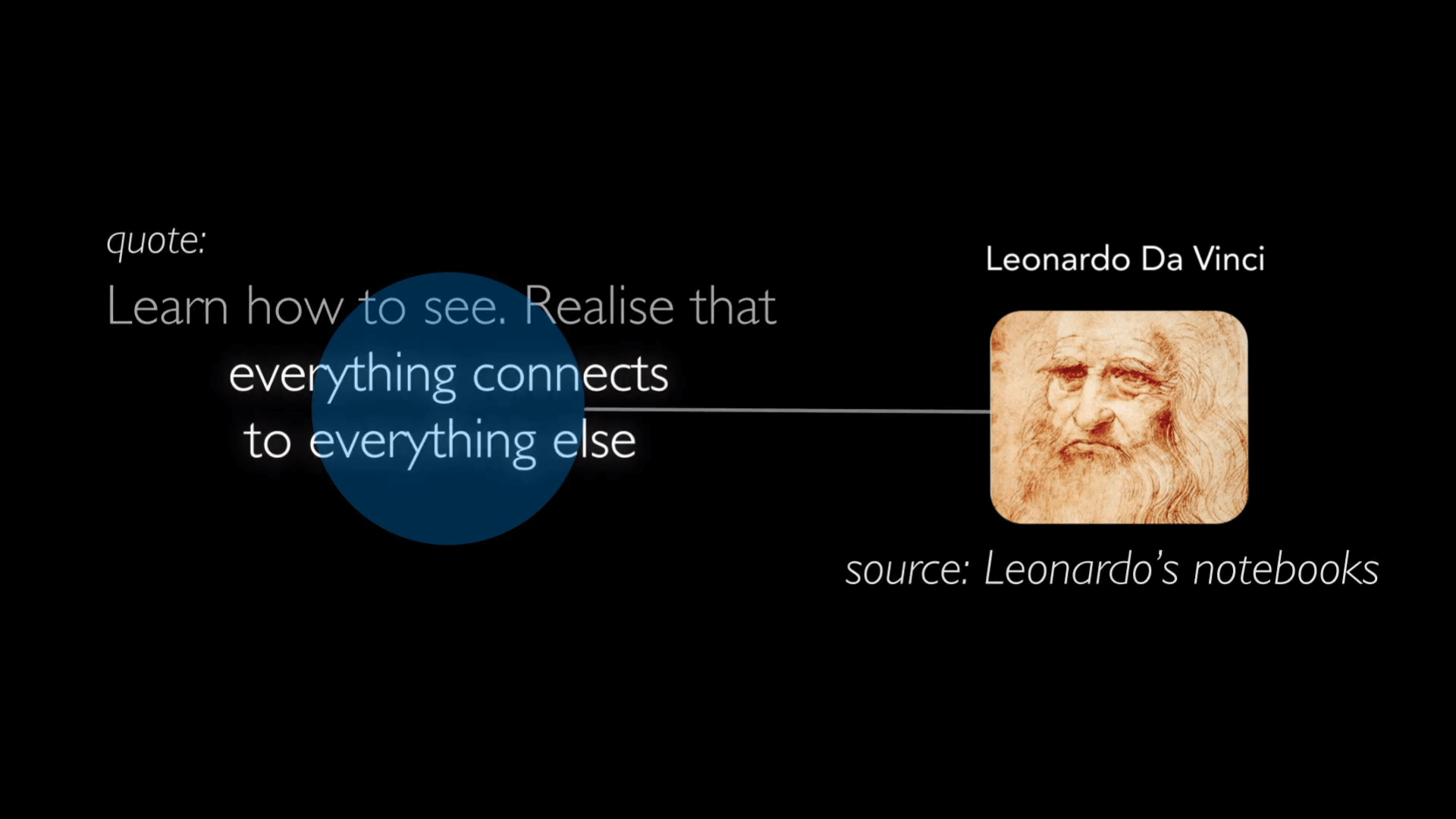
Leonardo da Vinci said:
“Learn to see. Realize that everything connects to everything else.”
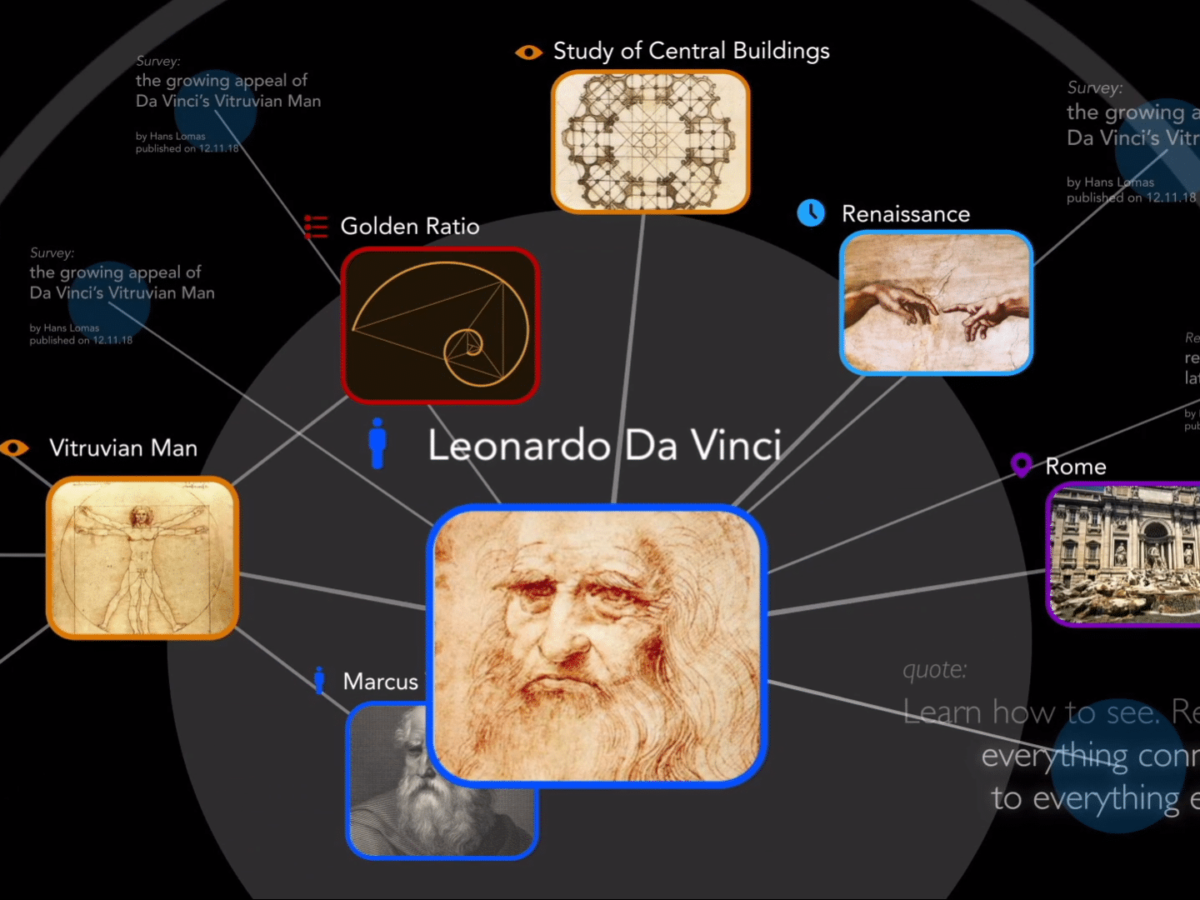
ResearchSpace focuses on the network of relationships that define us and our world.
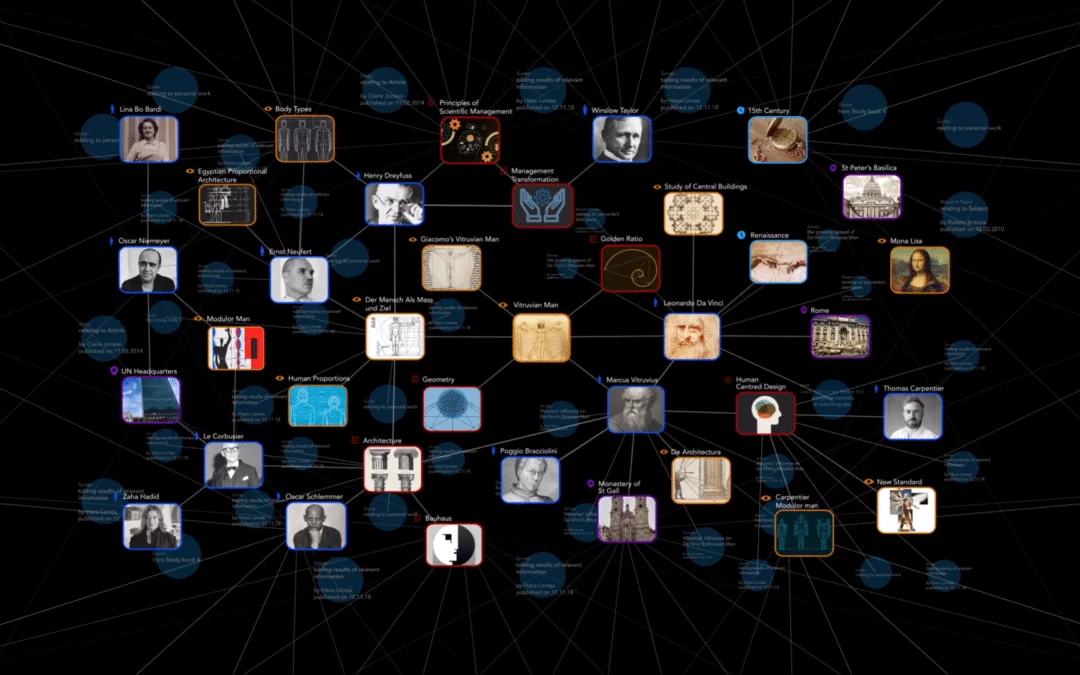
In ResearchSpace, the conventions of databases and spreadsheets are replaced by a knowledge map—a flexible canvas that allows researchers to evolve, without boundaries, a constellation of actors, places, objects, events, concepts, ideas, and practices.
Each item on the map is defined by its connections, which are not simply labels and lines, but meaningful relationships interpretable by a computer. Although they may resemble a mind map, knowledge maps express your research, thinking, and information processes as they evolve. Through its visual medium, you can work with data at different levels of detail, developing your knowledge and ideas, and incorporating them as evidence for beliefs and arguments alongside other collaborators.
Heraclitus, the philosopher, said: “
“The only constant in life is change.”
New knowledge can change our understanding of the past.
ResearchSpace can reflect this evolving history, rather than leaving the past frozen in time. Through a range of tools, researchers can understand, interpret, expand, and continuously annotate the knowledge map, contributing their findings and enabling them to compare and reconcile their different points of view.
In addition to visualizing the knowledge map, ResearchSpace generates different views of the data through maps, timeline diagrams, and charts.
These views can be interwoven into a new kind of evolving narrative, which can incorporate your research processes and information that will reflect new research and discoveries as they emerge.
As the narrative evolves, it generates more ideas that can be used to develop the knowledge map.
Walter Benjamin, the philosopher, said:
“Nothing that has happened should ever be regarded as lost to history.”
The knowledge generated and represented in ResearchSpace is not locked in.
Computers can understand and process each entry on the knowledge map and the relationships between them. Knowledge maps are expressed in an open data format that preserves contextual meaning and is designed to facilitate the integration of open data, enabling future scholars to access earlier chains of evidence, beliefs, and arguments.
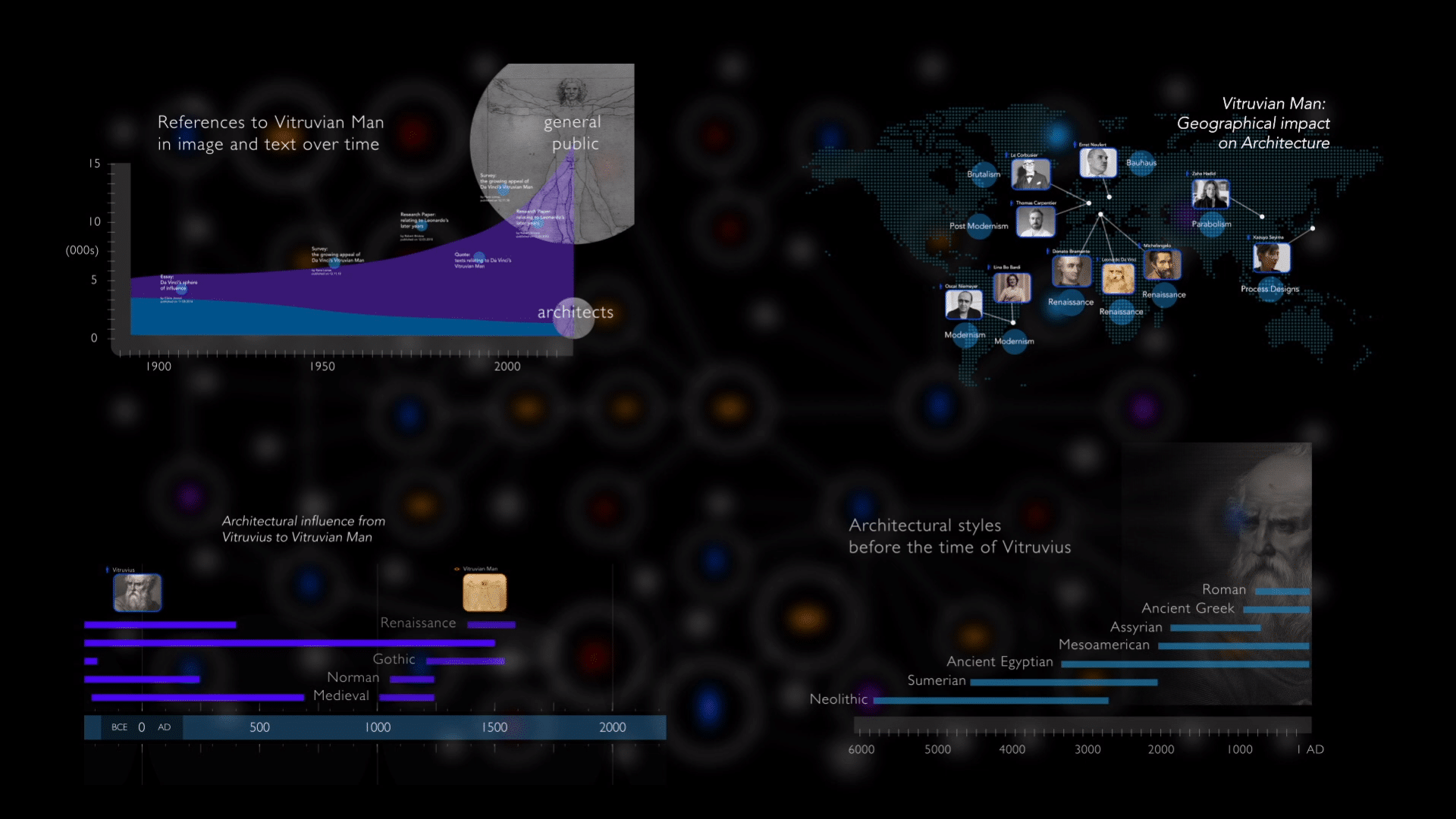
As more people collaborate using ResearchSpace, new knowledge maps will begin to connect with one another. These super maps will bring together previously fragmented research from different points of view, confronting contradictions that help us understand a new and broader meaning of the past and the present.
Through ResearchSpace, our evolving knowledge of the world can be better reflected in a digital space.
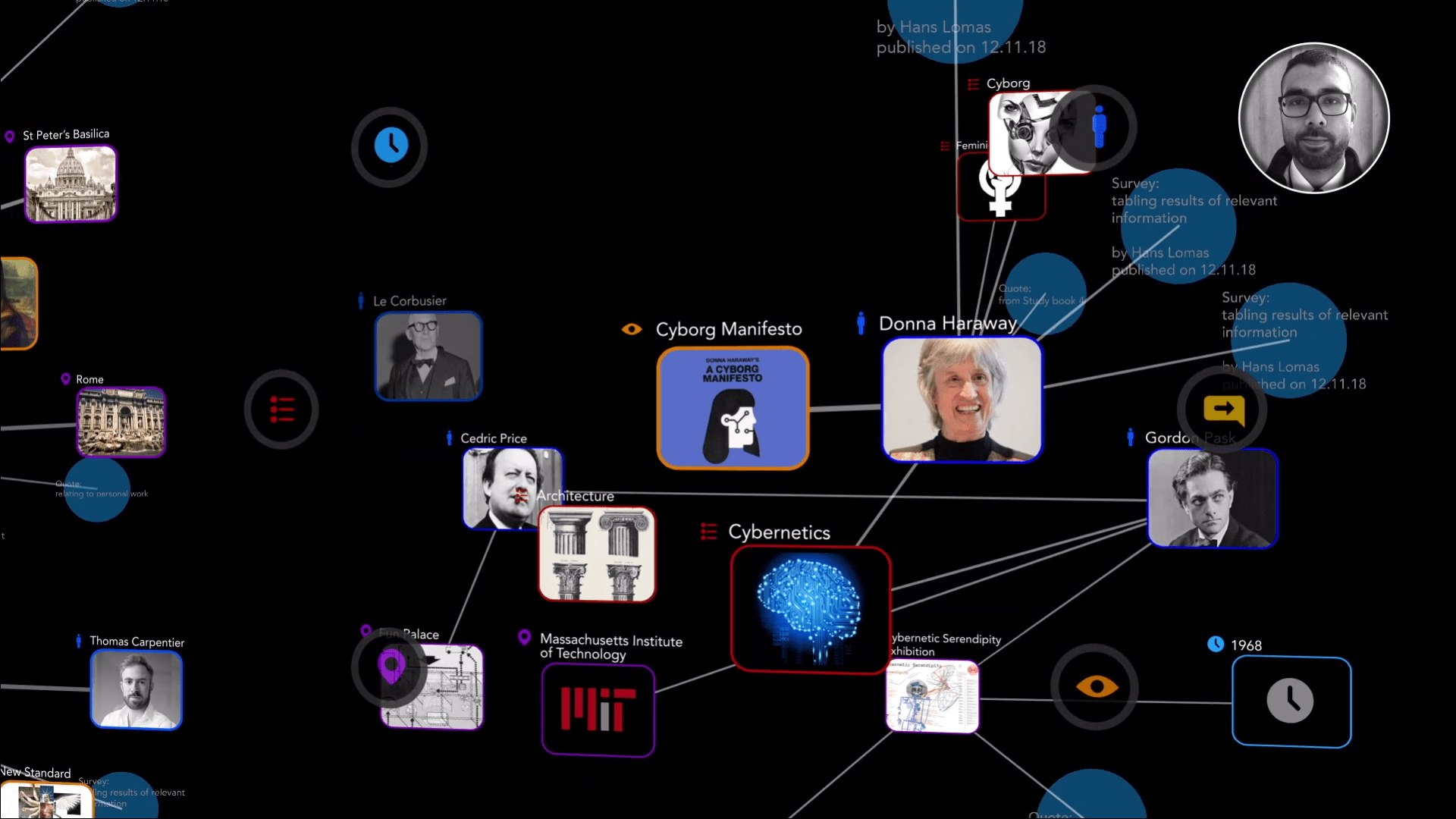
Imagine your SEO project making use of structured data that creates a Knowledge Graph specific to your semantic domain. That is the proposal I make to those who hire me as an SEO specialist: to work with Semantic SEO to achieve advanced results.
Knowledge Graph and Semantic SEO concepts
| Term or Entity | Definition or Description | Application Context | Cited Benefits | Related Tools or Projects |
|---|---|---|---|---|
| Website optimization for search engines, with a focus on long-term organic traffic and user experience. | An optimization strategy that uses semantics and connected data to improve information retrieval. | Advanced organic search results, increased traffic, and better alignment with business objectives. | A graphical, visual, and understandable representation of the connections and relationships between interconnected data. | Artificial Intelligence (AI), Language Models (LLMs) |
| Knowledge Graph (Knowledge Graph) | Representation of complex relationships so that computers can interpret meaning and context. | Indexing information through search engines and creating domain-specific knowledge graphs. | Enables understanding dynamic connections, preserves contextual meaning, and facilitates open data integration. | ResearchSpace, British Museum |
| Structured Data | Means of organizing data, such as spreadsheets or databases, which can lose context if they are not used with a focus on relationships. | Indexing information through search engines and creating domain-specific knowledge graphs. | Enables the creation of domain-specific Knowledge Graphs for semantic domains and facilitates machine processing. | Spreadsheets, Databases |
| Ontologies | Research and integration with AI and SEO tools to structure domain knowledge. | A project and technology that use knowledge maps and open data formats for academic research and collaboration. | Supports deep classification, categorization, and organization of information for search engines. | Taxonomies, Controlled Vocabulary |
| ResearchSpace | Enables working with data at different levels of detail and reconciling distinct points of view. | Flexibility for the evolution of knowledge, integration of fragmented research, and preservation of chains of evidence. | A digital environment for researchers to evolve ideas, practices, and narratives without boundaries. | British Museum, Knowledge maps |
| Knowledge Maps | Flexible canvases that express research, thinking, and information processes as they evolve. | Replacing rigid database conventions with visual views of data (maps, diagrams). | A library science tool for the formal representation of knowledge and relationships. | ResearchSpace |