

In this post, I will show you some results achieved on real websites with a new way of doing SEO, Semantic Optimization.
I would like to clarify that I will keep this post constantly updated as new results emerge from the projects I execute. Here, I will gather both current and older results that also demonstrate the practical outcome of semantic optimization.
Semantic optimization is the future of SEO
Semantic search aims to generate more relevant results by understanding the searcher’s intent and the contextual meaning of terms as they appear in the searchable data space on the Web or in closed systems, thereby improving search accuracy.
Content that is well-evaluated in semantic search is written in a natural voice, focusing on user intent and considering related topics that users might search for in the future.
Semantic optimization is a new way to optimize online projects, which takes into account a relationship based on the meaning of each term on your site (not just words, but entities such as people, events, and occurrences) and the relationship between each of these entities.
The goal of semantic search is to provide the person who searches with more precise results, understanding intent and going beyond keywords, delivering results like the one below.
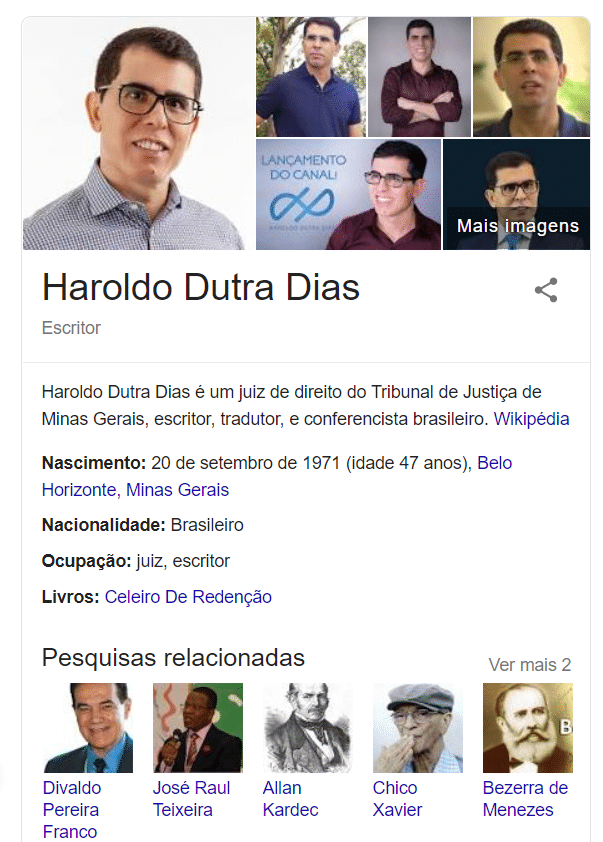
If you perform a search for Haroldo Dutra Dias, you will find this result to the side.
In it, you will find the first section with photos of the Spiritist speaker, with a link to view more images.
Following that is an excerpt extracted from Wikipedia about Haroldo and information regarding his place and date of birth, in addition to other data.
After that, we see suggestions for searches related to the searched topic. This search utilizes what I mentioned above: the connection between entities within the same semantic domain, in this case, Spiritism.
The people (semantic entities) Haroldo Dutra Dias, Divaldo Pereira Franco, José Raul Teixeira, Allan Kardec, Chico Xavier, and Bezerra de Menezes are related by their activities within this field.
Success Cases with semantic optimization
The first success case I want to show is the one achieved on the PLING blogs.
Pling is a company that sells logos, websites, and systems for various types of independent professionals.
Semantic Optimization for Blogs
When I was responsible for the company’s marketing, I created a content creation strategy based on semantic domain research that defined themes and entities to be addressed by each site and blog. With this, results began to appear.
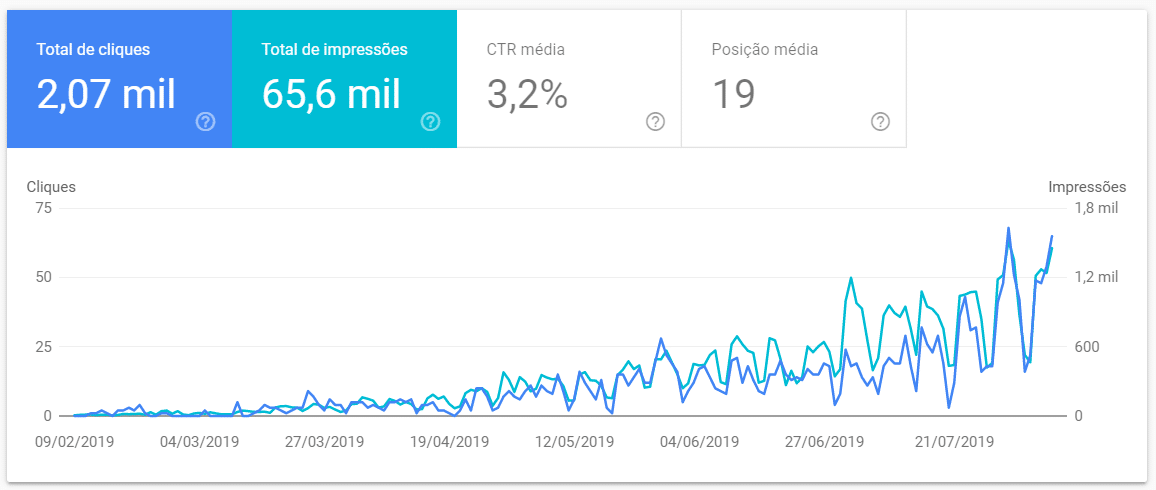
The graph above shows 6 months of data from one of the blogs, the Psychology Blog. Despite no longer working at this company and the content not having been updated for over a year, the impression and click results continue to rise, as the numbers show.
This is an advantage of Semantic SEO work compared to standard SEO work: its permanence over time!
All projects where I have developed this technique for more than a year demonstrate constant improvement in the results achieved. Of course, I do not mean to say that if you hire me for a year and stop doing the work that needs to be done, you will have the same results as you would if the project were not interrupted.
A semantic optimization project is almost time-proof, but if maintained constantly, it will bring increasingly better results.
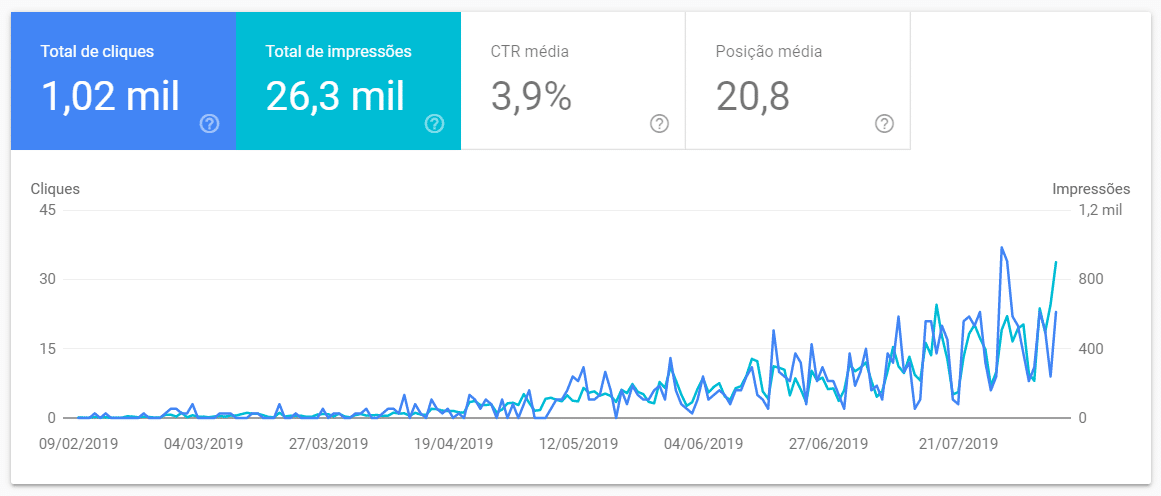
Another result that follows the same path as the previous one is that of the Architecture Blog, a project created in the same way I explained above, also for Pling. Even after a year without new content, it continues to bring growing results.
Of course, if the Blog had been updated at the previous pace, the results would be much better. But the decision regarding that was not mine, but rather the company’s management.
Semantic Optimization for e-commerce
All types of sites can benefit from semantic searches. The work done for the site Mais Bonita por Menos followed a similar path to that done with Pling, but using a strategy suitable for a site that sells third-party products with a focus on the beauty market.
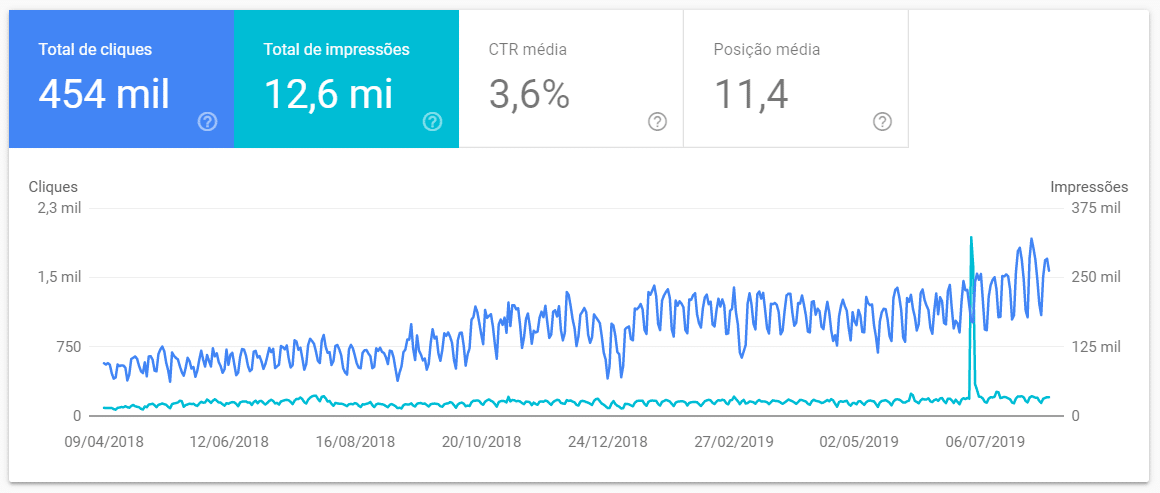
In this project, I worked alongside a programmer changing the site’s programming so that the generated code would be increasingly semantic. The goal was to make search engines understand the relationship between product images, prices, descriptions, and other information, showing increasingly rich results in search, especially on mobile.
The beauty market is highly competitive, and although the project was interrupted a few years ago, the results achieved, mainly with clicks, continue to bring good results. For confidentiality reasons, I cannot show more data, but the graph above already demonstrates the result achieved and projects what could be achieved with the continuity of a semantic optimization project.
Semantic optimization for a video site
The Espiritismo TV site is a platform for Spiritist videos. This site is one of the most important in Brazil in this field and features prominent speakers within its partnership roster. Among them is Haroldo Dutra Dias, whom I mentioned at the beginning of the post.
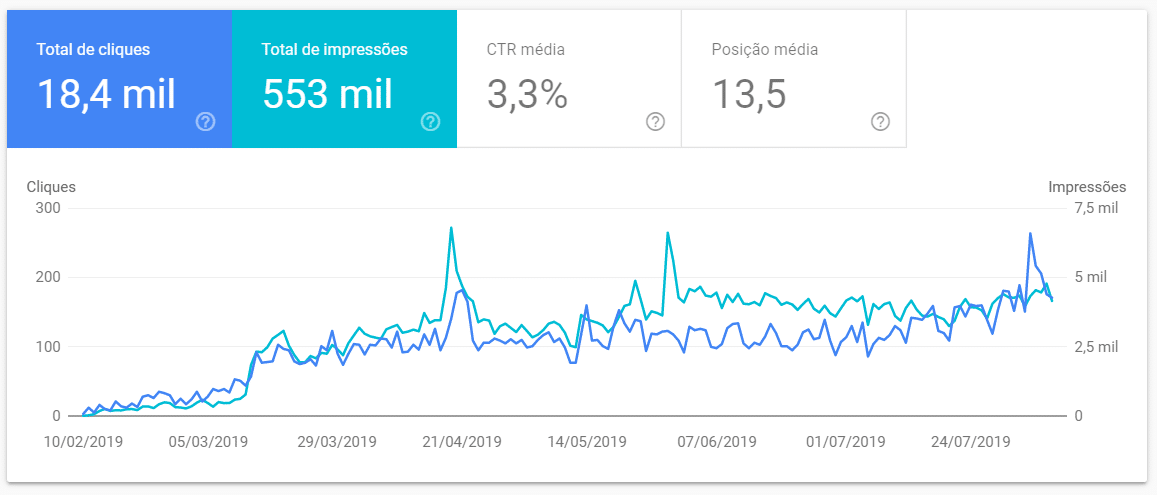
The graph above shows data from the last 16 months, and the impact of semantic optimization is clear.
In this project, we went further in the optimization work and created a taxonomy using an application called WordLift. With it, we can automate the process of creating a vocabulary of terms related to the site’s semantic domain, enriching text content and creating internal and external connections between the entities addressed in the site’s content.
Furthermore, by creating vocabularies such as the one for Allan Kardec, we achieved this type of internal links:

The result achieved is that search engines use the semantics of sites like DBpedia as a reference to understand the site’s content. When you help a search engine like Google understand your content, results like those in the graph below begin to appear.
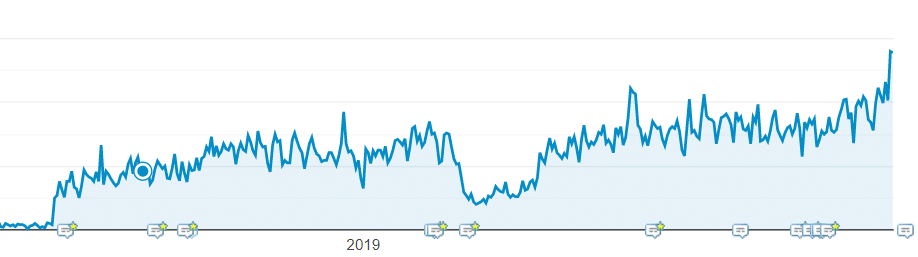
The numbers above represent access via searches. The difference is clear: on the right, at the beginning of the graph, we have a very low volume of access, but soon search engines began to understand the site’s content. The blue dot represents the moment we initiated semantic optimization (previously, the optimization process was standard).
The numbers began to rise gradually, experienced a drop during a domain change we performed, but after that, they resumed the previous volume and are now rising more and more.
Annual Comparison of Semantic SEO results
Semantic optimization and its advanced results

In the graph above, the most impactful result we had: placing content published two days earlier on Google Discover.
The video “Toma Lá da Cá” entered the recommendations that Google makes for content in its search app present on all Android devices (and iOS upon installation), and this fact brought us more than 81,000 visits in two days!
Stay tuned to this post if you want more success case references using Semantic Optimization. This post will be constantly updated with new data and projects.