

Taxonomy and SEO is a subject that you saw together? I must confess that for me, despite my years of experience in SEO, I am only beginning to pay attention to it since I started studying semantics.
Taxonomy is an essential ingredient for any project involving information, as it is the organization of the data that generate it. For this, having a good taxonomy is fundamental.
By being a logical structure that helps organize information, its use is more than recommended in digital projects, especially those that need performance in search engines.
But before that, we need to answer this question:
Taxonomy is a controlled vocabulary. It corresponds to a logical structure that helps organize information through equivalence, hierarchical, and associative relationships.
I learned this definition in the course Introduction to Corporate Taxonomy and Business Glossary, by Renate Land, which I took in June 2019.
Relating what I learned in this course with what I already know about Semantics and SEO, I understood that the perfect taxonomy corresponds to the way visitors search, how users navigate, and of course, how Google indexes websites.
Taxonomy is important for SEO
The first point to be considered is the ease of consumption of information that taxonomy definition provides. With a clearer information flow, your users stay on the site, increasing dwell time on the page.
The logical organization of your pages favors semantic markup work and understanding by search engines.
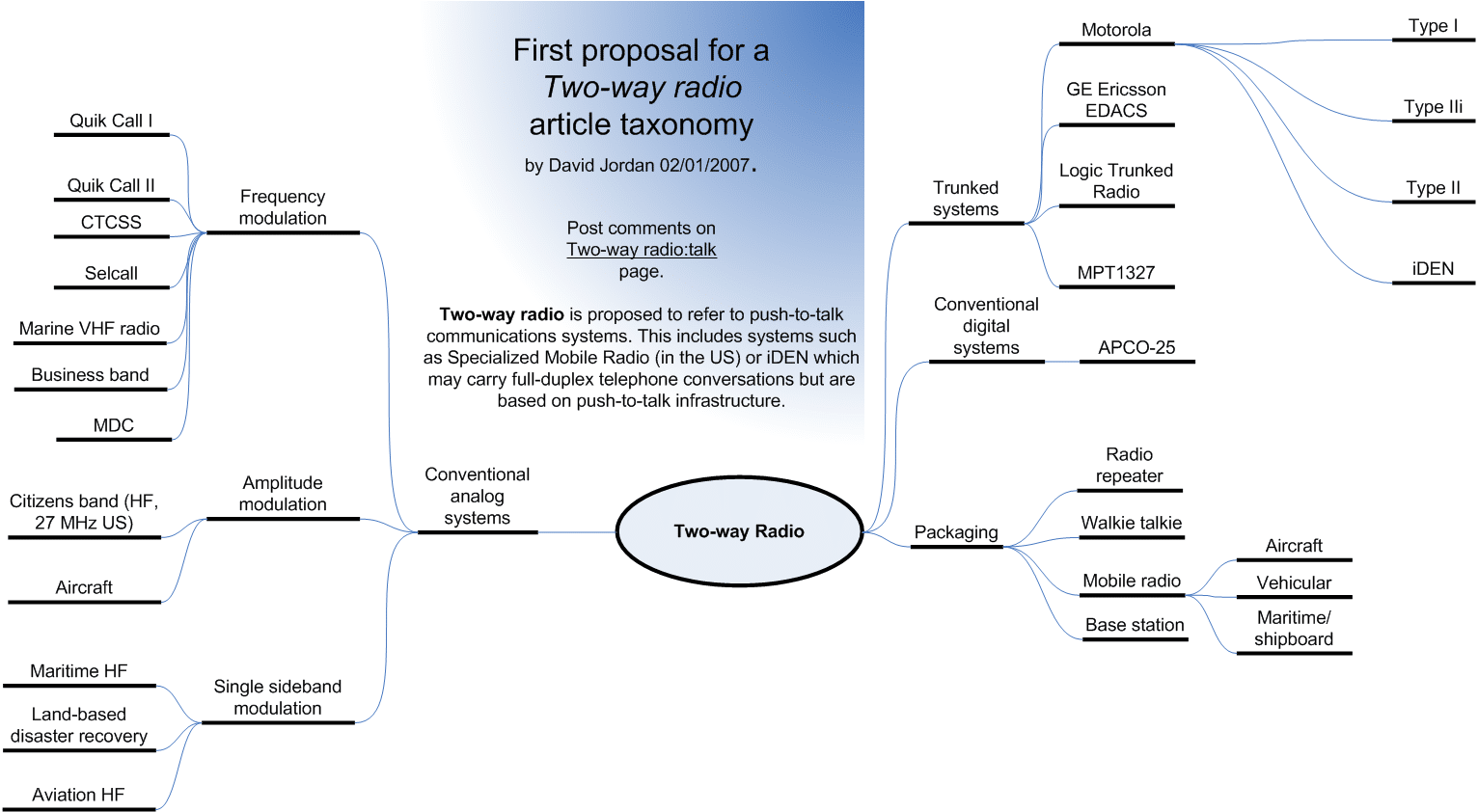
In addition, visitors will have no trouble navigating to the content they need, increasing the conversion of your pages.
Therefore, creating a taxonomy for your taxonomy site already leaves your site optimized before it is developed. The pages created will be easier for bots to index and rank. Taxonomies and SEO are ideal partners for your site to become more semantic.
By making the bots’ work easier, your site will be indexed faster and your content ranked better.
Taxonomy is the preparatory work that will ease the workload for everyone involved in the project.
Creating taxonomies for SEO
Creating Taxonomies for SEO projects (Site Optimization) is not common practice, but it is something that can elevate your project to a new level.
At least in my experience, I usually take on already created sites to optimize something that is already in use and being accessed.
Therefore, the architecture, design, and development have already been done, usually ignoring the techniques of usability, information architecture, and website optimization.
This prevents me from creating a minimum level of organization for the project’s data. But I have had experiences where I participated from the beginning, and the results were sensational:
Taxonomies as a source of data architecture
I view all the information contained in a digital project as data. And that is why I am talking about data as a unit of information here. Because of this, we need to talk about data architecture in taxonomy.
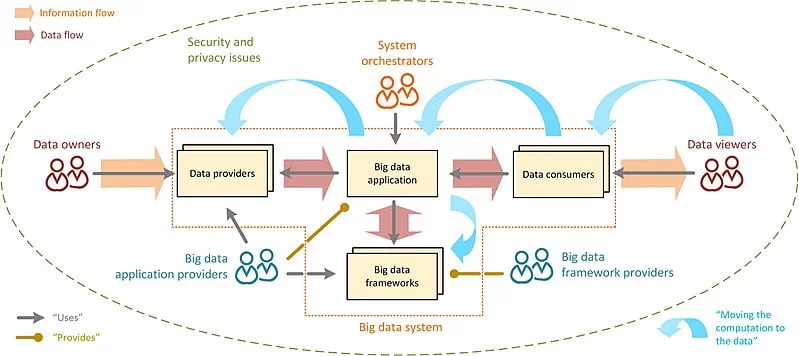
We can define data architecture as the structure of an organization’s data components.
Experts may consider this structure under different levels of abstraction and their interrelationships, as well as the principles, guidelines, norms, and standards that govern projects of all types.
A joint effort between an information taxonomist and a data architect would involve a process of managing informational assets and a data design, defining the business objectives for that specific project.
In a broader sense, data architecture therefore includes a complete data analysis of the relationships between an organization’s functions, available technologies, and data types, coming very close to the field of taxonomy.
Taxonomies, data, and SEO
Taxonomy is considered one of the domains that constitute the pillars of enterprise architecture.
It is closely related to the set of definitions for data structures, relationships, and behavioral rules applied to any digital projects, whether they are open to the general public or not.
In my research for this post, I found this spreadsheet with the interesting approach of the Zachman framework to data architecture:
| View | Data (what) | Stakeholder |
|---|---|---|
| Scope/Context | List of things important to the business (subject areas) | Planner |
| Business / Conceptual Model | Semantic model or Conceptual / Enterprise Data Model | Owner |
| System / Logical Model | Logical data model | Designer |
| Technology / Physical Model | Physical data model | Builder |
| Component Configuration | Data definitions | Integrator |
| Functional Corporation | Data | Worker |
See how your items relate to areas such as Semantic SEO, Structured Data Markup, and, of course, the creation of taxonomies.
Creating taxonomies for websites
Websites that do not use any paradigm for organizing information become much harder to navigate and understand.
Without using a taxonomy, you run the risk of leaving your visitors lost.
“Applying a well-planned taxonomy to your content can transform the way you communicate with your customers, organizing your information in a way that aligns with what users expect. This provides an immense return on investment through enhanced content discovery, SEO localization, and online marketing.” , customer self-service and commerce. There are four main reasons why having a taxonomy for your website matters.
Bill Ross, CEO of Linchpin SEO
So, do search engines and my users need a taxonomy?
Let us define taxonomy again to avoid mistakes.
Taxonomy according to Wikipedia
Taxonomy (from Ancient Greek τάξις, táxis, “arrangement” and νομία, nomia, “method“)[1] is the biological discipline that defines groups of biological organisms based on shared characteristics and gives names to those groups. Each group is given a rank. Groups can be aggregated to form a supergroup of higher rank, creating a hierarchical classification.[2][3] The groups created by this process are referred to as taxa (singular, taxon). An example of modern classification was published in 2009 by the Angiosperm Phylogeny Group for all families of living flowering plants (APG III System).[4]
It is easy to understand clearly that taxonomy began with the classification of living beings, in biology. This organizational model is so efficient that it has been adopted in various other areas of human knowledge.
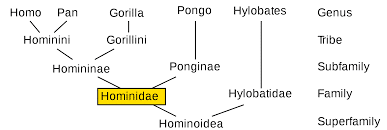
Here we discuss taxonomies and SEO.
Users think about content in different ways
And your site must be built and optimized with them in mind.
Taxonomy-guided content tagging allows you to relate your pieces of content by concepts, better defining your semantic field.
When I define the content structure for Semântico Blog, I define the semantic field as follows:
- SEO
- Semantic research
- Articles on optimization
- Articles on semantics
- Articles on structured data
- SEO consulting
Users have different interests
A taxonomy allows you to connect people with their interests and preferences, and I hope this has been made clear.
If you can, let your visitors customize their experiences on your site. By connecting your business interests with those of your visitors through your content, your chances of success increase significantly.
Search engines need structure
A search engine crawls the Web for sites the same way we did years ago: navigating through links and structure, and they need to find structured data to be effective and efficient.
The more optimized your structure is (internally and externally), the more efficient search engines will be at finding, indexing, and ranking your content. Learn how to use structured data.
So,
How to classify your site’s information and create the best taxonomies and SEO?
Determine the main objective your taxonomy serves
There are many benefits to using taxonomies and SEO for your website.
One of the most important benefits of taxonomy is that a taxonomy will make it possible to easily organize your content. Another is that it helps create content highly focused on the terms defined in the taxonomy you established.
But note that it is essential to determine which of these benefits you want to focus on. Focus on that one first, then expand outward.
Perform term research for each section of the taxonomy
Although it is possible to do research on terms on your own, manually, there is a variety of tools that help automate this work.
Creating a list of possible terms is the first step to be taken, never forget this, because it will be important to have several terms for each section of the taxonomy. It is essential that they are chosen with a focus on the relevance of your page’s content.
Determine which taxonomy structure works best for your site.
A properly created taxonomy will help you choose each search term and its variants consciously.
Consider the needs of your website readers
You should carefully examine the data demographics and reading habits of your website.
There are several common taxonomy structures used by website owners. Here are the most common website ones:
Flat taxonomies
A flat taxonomy for a site defines a home page and a list of subcategories.
In this type of taxonomy, there are no levels within subcategories. This creates always top-level categories, and it is possible to choose from the page initial menu any of the pages that the site has.
What types of sites should use this taxonomy?
It is recommended for small websites. Where we have little content, with a smaller division among them.
Hierarchical taxonomy
This taxonomy structure is frequently used for larger websites.
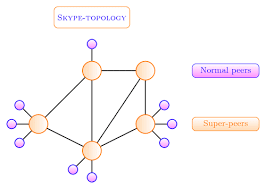
In a hierarchical taxonomy, there are main categories that include subcategories. When an individual clicks on one of the subcategories, they receive options for one or more subcategories within them. In some cases, there are multiple levels of subcategories.
These are the two main types of information architecture your site can use, based on the work of Taxonomies and SEO. Of course, we will not cover everything about this subject in a single post, but I hope it serves as a starting point for you to do like me: